Best Android Phones for 2026: Should You Go Ultra or Choose Smart Value?
Choosing an Android phone in 2026 isn’t about flashy upgrades anymore. It’s about refinement, longevity, and real-world performance. Here’s a tech-driven look at the top contenders and how to decide which one truly fits your needs.
Buying a flagship smartphone in 2026 feels very different from five years ago. The explosive leaps in performance and camera quality have slowed. Displays are already stunning. Chips are already fast. Batteries already last all day.
So the real question isn’t “Which phone is the most powerful?” It’s “Which phone makes the most sense?”
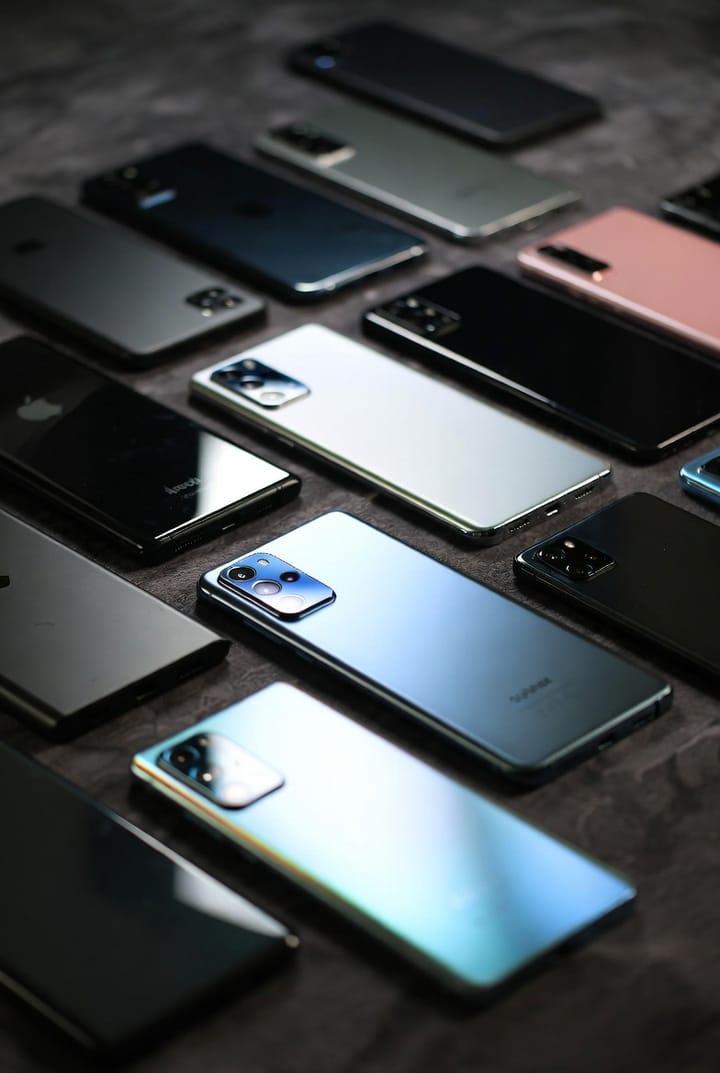
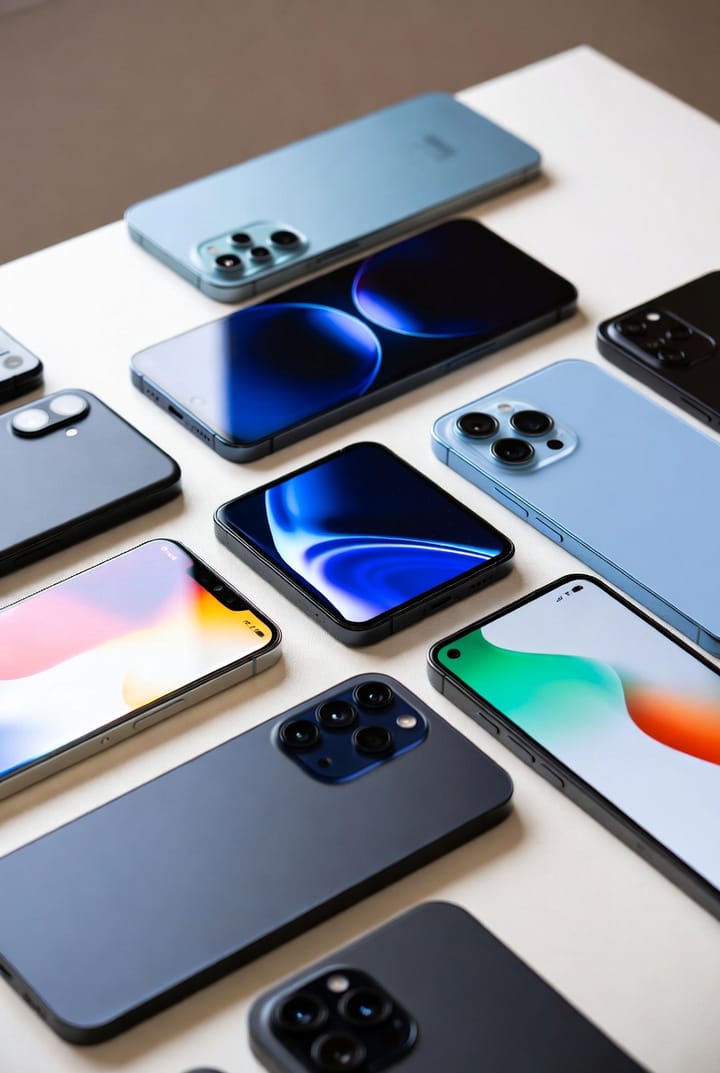
Three devices dominate the premium Android conversation this year: the Samsung Galaxy S25 Ultra, the newer Samsung Galaxy S26 Ultra, and the performance-focused OnePlus 15. Each represents a different philosophy of what a flagship should be.
Let’s unpack what that really means.
The Proven Powerhouse: Galaxy S25 Ultra
The Galaxy S25 Ultra remains one of the most complete Android devices available. Its expansive QHD+ AMOLED display pushes extreme brightness levels while maintaining excellent color calibration and power efficiency. The Snapdragon flagship processor inside still delivers more performance headroom than most users will ever exhaust, whether for 4K video editing, gaming at high frame rates, or multitasking across productivity apps.
Photography is where the S25 Ultra continues to justify its premium label. Its high-resolution primary sensor, paired with advanced telephoto hardware, handles everything from low-light street scenes to long-range zoom with impressive consistency. Add in S Pen support and long-term software updates, and it feels less like a phone and more like a mobile workstation.
For buyers who want stability and polish, this device represents the “safe flagship” choice. It is mature, optimized, and battle-tested.
The Refinement Machine: Galaxy S26 Ultra
The Galaxy S26 Ultra does not attempt to reinvent the formula. Instead, it sharpens it.
Under the hood, a next-generation Snapdragon platform improves sustained performance and AI acceleration. These gains are not necessarily dramatic in everyday scrolling, but they become meaningful in computational photography, generative AI features, and demanding gaming sessions. Thermal efficiency has reportedly improved, allowing the chip to maintain peak performance longer without throttling.
Display enhancements focus on brightness efficiency and panel refinement rather than resolution jumps. Charging speeds have been nudged higher, reducing downtime in practical use. Camera upgrades lean heavily into processing improvements, refining detail retention and dynamic range rather than dramatically changing sensor hardware.
The result is a device that feels smoother, smarter, and slightly more future-proof. However, for someone already using last year’s Ultra, the experience will feel evolutionary rather than revolutionary.
The Strategic Value Choice: OnePlus 15
The OnePlus 15 approaches the flagship conversation differently. It aims to deliver top-tier performance without crossing into ultra-premium pricing territory.
Its processor competes directly with the best silicon available, and its fast-charging system often surpasses more expensive competitors. OxygenOS continues to emphasize smooth animations and low system overhead, which contributes to a perception of speed that goes beyond benchmark scores.
While its camera system may not push the extreme zoom boundaries of Samsung’s Ultra line, it delivers reliable, balanced results for most scenarios. For many buyers, that is more than sufficient.
The OnePlus 15 appeals to users who want performance and fluidity but question whether marginal camera gains justify a four-digit price tag.
What Actually Matters in 2026
In today’s smartphone landscape, raw performance is rarely the bottleneck. Even last year’s flagships handle modern apps effortlessly. The meaningful differences lie in thermal management, AI feature support, battery endurance, and long-term update commitments.
Battery life has quietly become more important than synthetic benchmarks. A device that maintains consistent all-day performance under heavy use often feels more impressive than one that wins lab tests. Similarly, software support length directly affects resale value and overall ownership cost.
Cameras, while technically improving, have reached a plateau for most users. Incremental improvements in low-light noise reduction or zoom clarity are appreciated but rarely transformative in everyday sharing scenarios.
Choosing the Right Flagship
If you prioritize maximum features, S Pen integration, and the most versatile camera hardware available, the Galaxy Ultra series remains unmatched. If you are upgrading from a device that is two or three generations old, the S26 Ultra offers the strongest long-term runway.
However, if you already own a recent flagship and it performs smoothly, skipping a generation may be the financially smarter move. The OnePlus 15 stands out for buyers who want near-flagship power and charging speed while maintaining a more rational budget.
The truth is that in 2026, flagship smartphones are less about necessity and more about optimization. The best device is no longer the one with the longest spec sheet. It is the one aligned with how you actually use your phone.
And sometimes, the smartest upgrade decision is recognizing that your current device is already more capable than you need.