High-Speed FPC Connectors Supporting 25Gbps+: Best Options for SSD, Server, and Data Center Applications
High-speed data is moving to FPC. We break down how to handle 25Gbps+ speeds, 85-ohm impedance matching, and the critical role of 360-degree shielding.
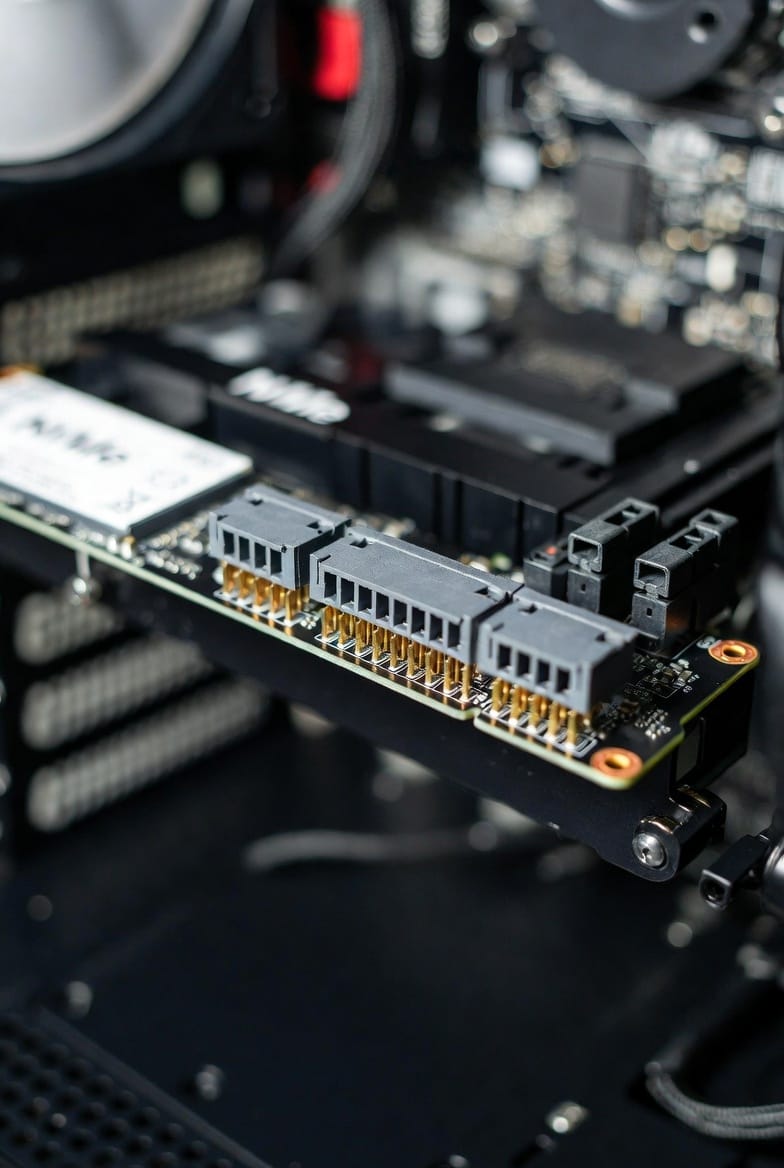
Traditionally, FPCs were for low-speed signals like buttons and screens. But in 2026, the data center is pivoting. We are now seeing FPCs replace twin-ax cables for internal SSD (NVMe) and server-to-server interconnects because they offer better airflow and easier routing. But at 25Gbps (PAM4), the connector is no longer a simple bridge; it's a high-frequency component that can wreck your Bit Error Rate (BER).
The Impedance Matching Game (85Ω vs 100Ω)
Most standard FPC connectors are 100Ω. However, many server-side protocols—especially those derived from Intel or PCIe standards—operate on 85Ω differential impedance. If you plug an 85Ω FPC into a 100Ω connector at 25Gbps, you create a "Discontinuity" that acts like a mirror, reflecting signal energy back to the source. This causes "Eye Closure" on your oscilloscope. In 2026, high-speed FPC connectors are being engineered with specific terminal geometries to hit that 85Ω target, minimizing reflections and allowing for longer trace lengths.
360-Degree EMI Shielding
At 25Gbps, "Crosstalk" is your primary enemy. Signal from Pair A will bleed into Pair B through the air.
- The Solution: Shielded FPC connectors. These aren't just plastic blocks; they have a metal outer shell that makes contact with the FPC's own shield layer.
- Grounding Tabs: Look for connectors with multiple SMT grounding tabs. Each tab acts as a low-inductance path to the PCB ground plane. In 2026, the gold standard is a "360-degree wrap" where the connector shell completely encloses the mating interface, providing a continuous Faraday cage.
The G-S-S-G Pinout Strategy
To survive 25Gbps+, you can't just assign pins randomly. You must use a G-S-S-G (Ground-Signal-Signal-Ground) layout. The ground pins act as "fences" that isolate the differential pairs. High-speed FPC connectors are now designed with internal "crosstalk barriers"—small metal plates inside the plastic housing—that further isolate the signals. If you're designing for a 2026 server, your connector selection must include a full TDR (Time Domain Reflectometry) and S-parameter model to ensure it won't turn your high-speed data into noise.