How Your Phone Just Became Platform-Agnostic
Thanks to a perfect storm of EU mandates and Google’s latest "Quick Share" expansion, the "Blue vs. Green" file-sharing war is ending. This is the story of how we reached the era of the Universal AirDrop.
The Last Stand of the Digital Gatekeeper
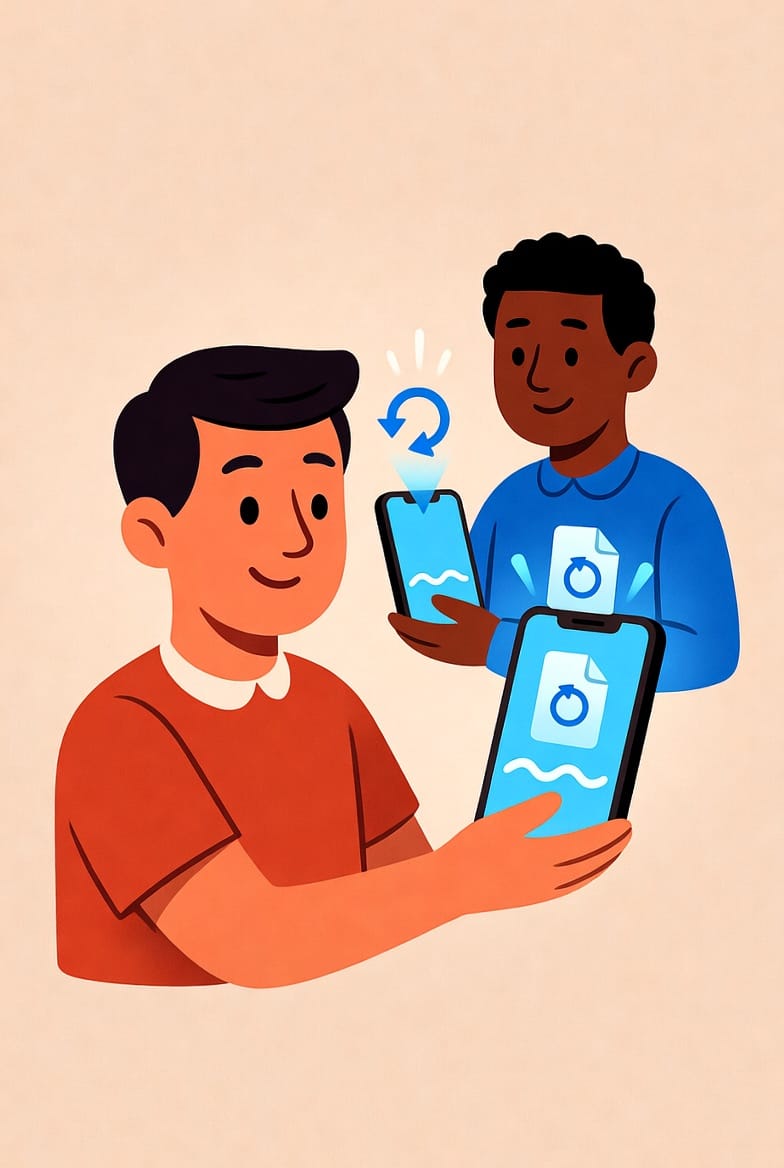
For years, the "walled garden" wasn't just a metaphor; it was a daily social friction. You’ve been there: at a wedding, a concert, or a family dinner where a group of iPhone users huddle together to "AirDrop the photos." If you happened to be the one person with a Samsung or a Pixel, you were effectively invisible. You were the "link person"—the one who had to wait for a compressed, low-quality Google Photos link or a pixelated WhatsApp message.
But as we move through February 2026, that invisible barrier is being dismantled. It started with a whisper in Brussels and ended with a massive software handshake between Mountain View and Cupertino.
The Dawn of "Quick Share" for Everyone
The revolution began when the European Union’s Digital Markets Act (DMA) reached its final enforcement phase. The mandate was simple yet radical: gatekeepers must allow their hardware to play nice with others. For Apple, this meant opening the "secure enclave" of its wireless chips to third-party protocols.
Google didn't waste a second. They rebranded "Nearby Share" into a sleek, aggressive entity called Quick Share and spent the last year refining a "backdoor" that isn't a vulnerability, but a bridge. By utilizing a sophisticated blend of Bluetooth Low Energy for the initial "handshake" and peer-to-peer Wi-Fi for the heavy lifting, Google created a system that allows an iPhone to see an Android device as if it were part of the family.
Testing the "Backdoor" in the Wild
On subreddits like r/Android and r/Apple today, users are documenting their first "trans-platform" transfers with a sense of disbelief. One viral post shows a user sending a 2GB 4K video from a Galaxy S26 to an iPhone 16 Pro in under thirty seconds. There was no "preparing file" hang-up, no "failed to connect" error—just a prompt on the iPhone asking to accept a Quick Share file, followed by a blazing-fast progress bar.
The technical wizardry here is impressive. The devices create a temporary, encrypted tunnel. Because it uses Wi-Fi Direct, the transfer doesn't touch the cloud, meaning your private photos stay between the two devices. It’s the speed of a physical cable with the convenience of a ghost.
A New Era of Hardware Freedom
This shift is more than just a convenience; it’s a psychological break from brand loyalty. When "the wall" falls, the reason to stay with a specific brand shifts from necessity to preference.
In 2026, you can finally buy that phone with the 7,000mAh battery or the 10x periscope lens without worrying that you’ll be the "outcast" in the group chat or the photo-sharing circle. The "Green Bubble" stigma is losing its teeth because, for the first time, the hardware in your pocket doesn't dictate who you can talk to or what you can share.
The walled garden is becoming a public park, and everyone is invited.