Molex FloatStack vs. Hirose BM54: The Automotive B2B Hybrid
EVs need both power and data in a single, vibrate-resistant package. Compare the Molex FloatStack and Hirose BM54 for your next vehicle project.
The shift toward Electric Vehicles (EVs) has created a new requirement: the "Hybrid" connector. We no longer have room for one connector for power and another for signal; we need both in one housing. The Molex FloatStack and the Hirose BM54 are the two heavyweights fighting for the ADAS (Advanced Driver Assistance Systems) and battery management markets in 2026.
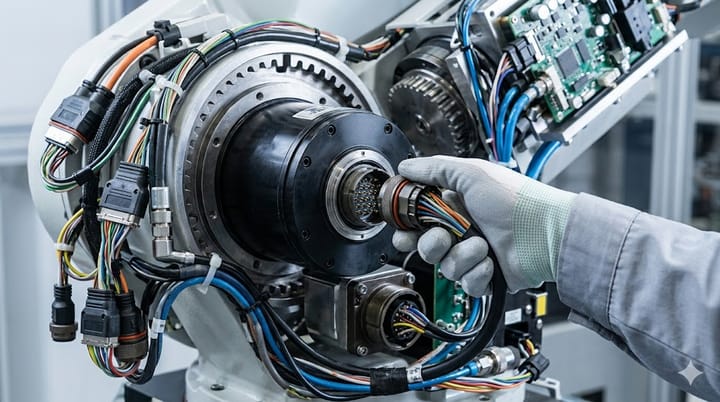
The Molex FloatStack is a beast of a connector, designed with USCAR-2 compliance in mind. It can handle up to 6.0A of power while simultaneously passing high-speed data. Its "float" mechanism is extremely robust, designed to survive the thermal shocks of an engine bay or an under-chassis battery pack. If your design is a heavy-duty EV power inverter, the FloatStack’s ability to handle high-current "bursts" without overheating is its killer feature.
The Hirose BM54, however, is the "Micro-Floating" specialist. It’s significantly smaller than the FloatStack, making it the perfect choice for the camera modules and LiDAR sensors used in autonomous driving. It offers a ±0.4 mm float in a tiny footprint, ensuring that even if the sensor's housing expands in the sun, the data link to the main computer remains intact. The verdict? Use the Molex FloatStack for the "muscles" of the car (power/battery) and the Hirose BM54 for the "senses" (sensors/ADAS).