The AI Premium Tax: Are You Paying for Innovation or an Immature Gimmick?
Smartphone manufacturers are slapping an "AI Premium" on their 2026 flagships, but are these nascent features truly worth the hundreds of extra dollars? From battery-hogging "smart" assistants to generative text that still feels more like a parlor trick than productivity...
Remember when "megapixels" were the ultimate spec war, only to realize that software processing mattered more? Welcome to 2026, where the new battleground isn't just camera sensors or refresh rates, but AI. And let's be blunt: that "AI Premium" tax you're seeing on your shiny new smartphone feels less like a value-add and more like a speculative investment you're making in their R&D.
The Elephant in the Room: Your Wallet (and Your Battery)
The sentiment is palpable across Reddit threads and tech forums: "I’m paying $200 more for a phone that writes emails I can write myself, but the battery still dies at 6 PM." This isn't just anecdotal; it's the core of the frustration.
Manufacturers are pushing features like on-device LLMs for instant text generation, real-time image manipulation, and "proactive" assistants that promise to anticipate your every need. Sounds futuristic, right? The reality for many users is a nascent tech stack that:
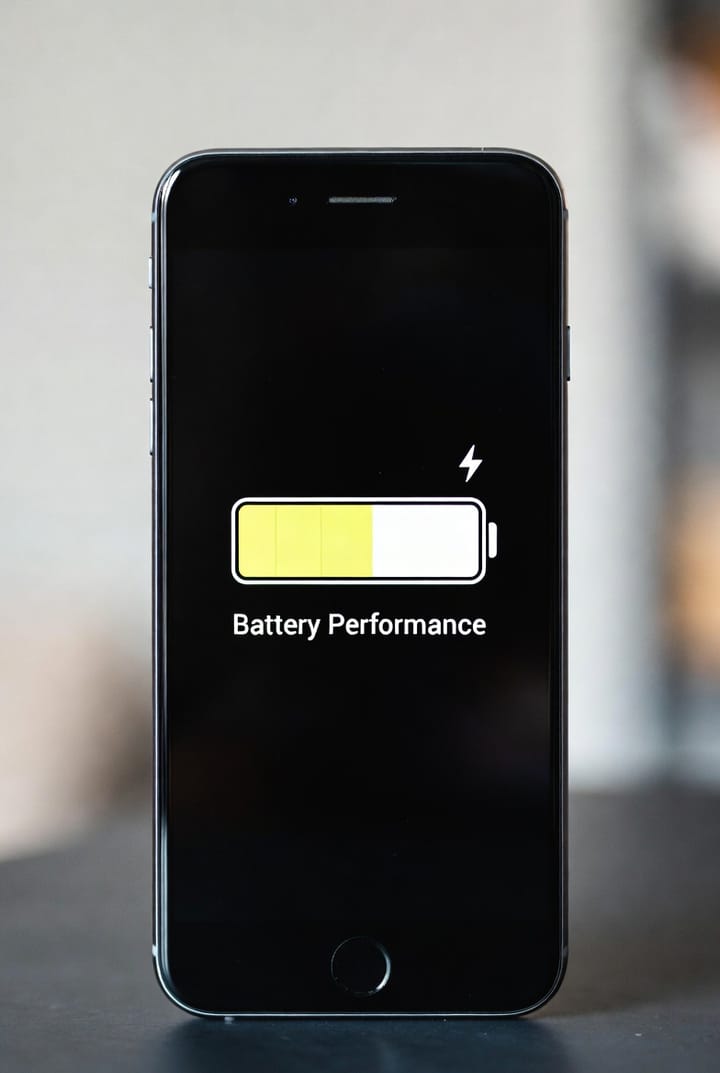
- Hogs Resources Like a Memory Leak: Localized AI inference, while powerful, isn't free. These sophisticated neural networks, even optimized ones, demand significant CPU and NPU cycles. The consequence? More heat, and crucially, accelerated battery drain. That 5000mAh cell suddenly feels like a 3000mAh workhorse from yesteryear if your AI agent is constantly chugging in the background.
- Solves Problems You Didn't Know You Had (or Didn't Care About): Does your email really need to be "summarized" by your phone, only to have you skim it anyway? Is "Magic Editor Pro Max" for tweaking photos truly a game-changer when Snapseed has offered similar (albeit manual) capabilities for years? Many AI features today feel like solutions searching for problems, rather than addressing genuine user pain points.
- Lacks Maturity and Nuance: Generative AI is powerful, but it's still in its infancy. We've all seen the hilarious (and sometimes unsettling) AI-generated text or images that miss the mark. Paying a premium for an AI that can't quite grasp context, tone, or specific user intent feels premature. We're paying for an impressive tech demo, not a fully integrated, seamlessly intelligent assistant.
The Tech Deep Dive: Why "On-Device AI" Isn't Cheap (Yet)
The shift to on-device AI is fascinating from an engineering perspective. It promises privacy, speed, and offline capability. But it comes at a cost:
- Dedicated NPUs (Neural Processing Units): These specialized silicon blocks are becoming standard in premium SoCs like the Snapdragon 8 Elite Gen 5 or Google's Tensor 5. They're designed for efficient AI workloads, but they add to the bill of materials.
- Memory Bandwidth & Storage: Running complex AI models locally requires faster memory and often more storage for the models themselves. This translates to higher component costs.
- Software Optimization: Getting these models to run efficiently on varying hardware configurations requires immense software engineering effort, which isn't cheap.
This isn't to say on-device AI isn't the future. It absolutely is. But the current implementation often feels like a beta test that users are subsidizing, rather than a polished, essential feature set.
When Will the AI Premium Be Worth It?
The "AI Premium" will truly justify its cost when:
- AI Becomes Invisible and Indispensable: When AI truly predicts your needs without being prompted, manages your notifications intelligently, optimizes battery life itself, and enhances core experiences (camera, communication) in ways that are genuinely groundbreaking, it'll be worth it.
- Battery Life isn't Compromised: This is non-negotiable. If AI makes our devices less reliable for fundamental tasks, it's a net negative.
- Customer Needs are Prioritized: Instead of inventing new "AI features," perhaps focus on refining existing ones or solving long-standing issues. Imagine an AI that genuinely manages your digital clutter, blocks spam calls with 100% accuracy, or provides truly proactive health insights without needing a manual prompt.
Hold Your Horses (and Your Wallet)
For now, that "AI Premium" often feels like an "early adopter tax." If you're looking for genuinely innovative features that will revolutionize your smartphone experience, it might be wise to wait for a generation or two. Let the AI mature, let the battery drain stabilize, and let manufacturers figure out what problem their fancy new AI is actually solving for you, the end-user.
Until then, save your hundreds of dollars. Your smartphone can probably still write those emails just fine on its own.