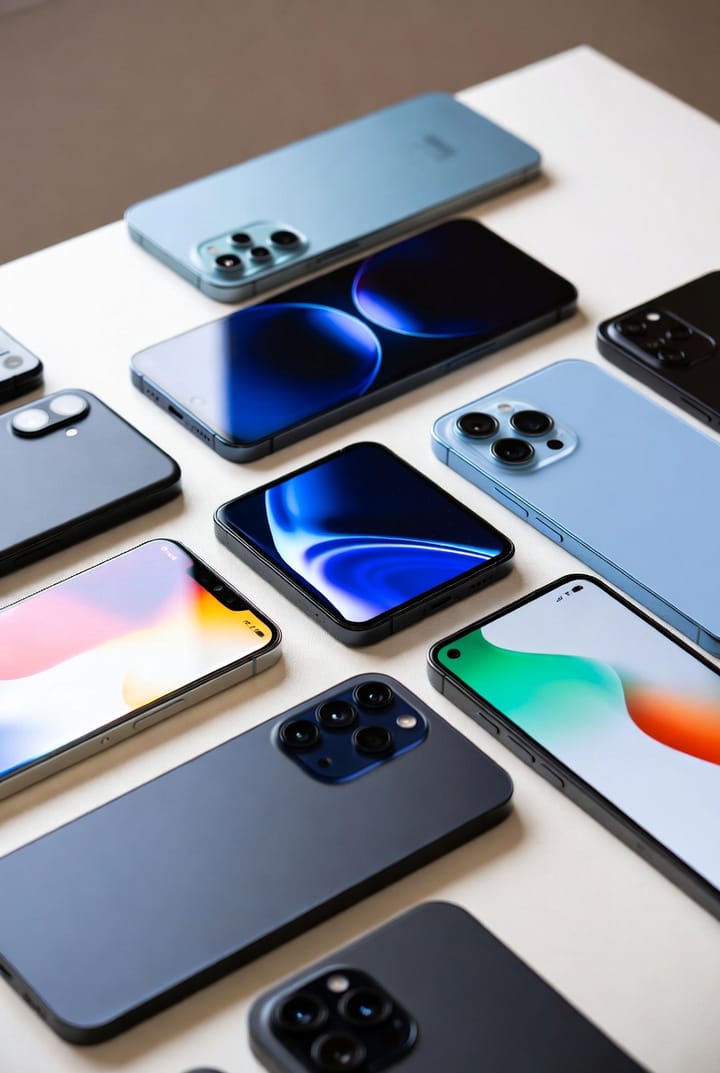
The Convergence of Mobility and Power: A Deep Dive into the Samsung Galaxy Z Tri-Fold
The traditional smartphone form factor is facing its most significant challenge. With the launch of the Galaxy Z Tri-Fold, Samsung has effectively bridged the gap between pocketable mobility and desktop-class productivity. Here is an evaluation of the most ambitious mobile hardware of 2025.
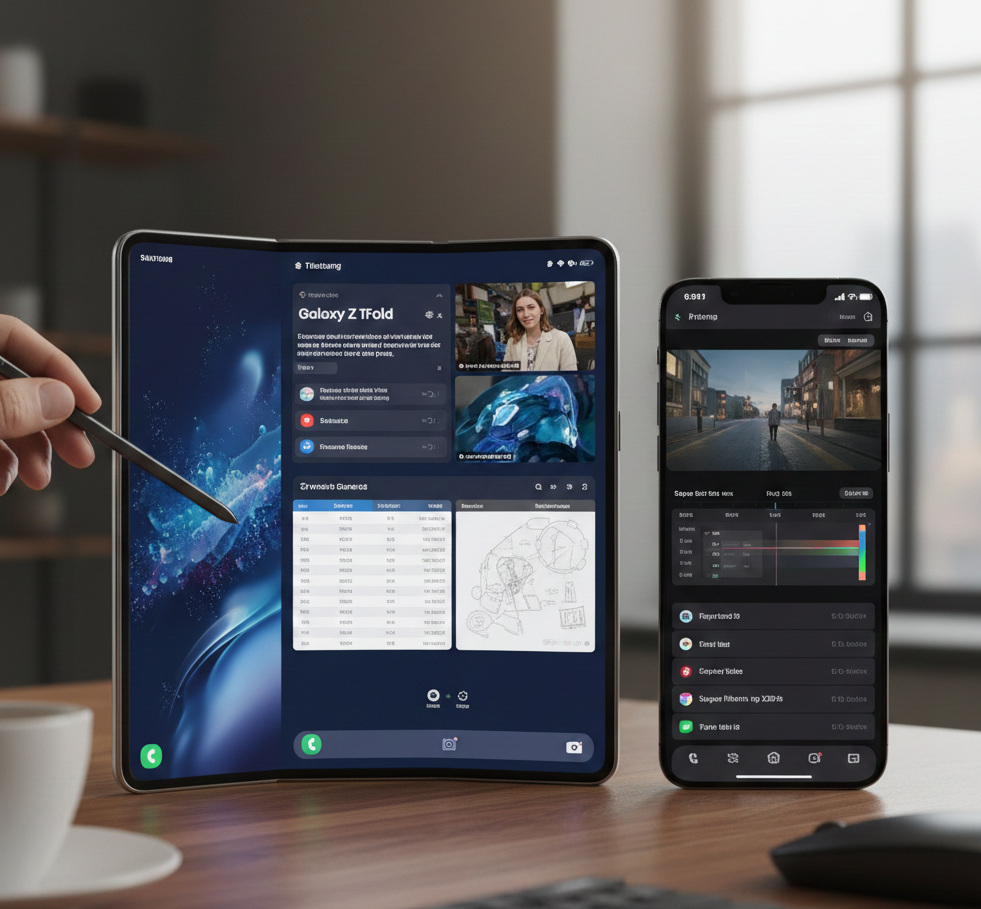
For over a decade, the mobile industry has been defined by the "slab" smartphone. However, the arrival of the Samsung Galaxy Z Tri-Fold marks a definitive shift in hardware philosophy. This device is not merely an iterative update to the foldable category; it is a complex feat of structural engineering that integrates three distinct screen segments into a single, cohesive workflow.
Structural Engineering: The Dual-Hinge System
The core innovation of the Z Tri-Fold lies in its proprietary dual-hinge architecture. Unlike previous foldables that utilized a single point of articulation, the Tri-Fold employs both an inward and outward folding mechanism.
- Adaptive Form Factors: In its folded state, the device operates as a standard 6.5-inch smartphone. When fully extended, it reveals a massive 10.0-inch Dynamic AMOLED 2X canvas.
- Durability Standards: Utilizing "Advanced Armor Aluminum" and Ceramic Glass, Samsung has addressed historical durability concerns. While the device weighs in at a substantial 309g, its 3.9mm thickness (unfolded) ensures it remains remarkably ergonomic during extended use.
Performance Benchmarks: Samsung vs. Apple
To understand where the Z Tri-Fold sits in the current market, it must be compared to the industry benchmark for "slab" flagships: the iPhone 17 Pro Max.
While Apple focuses on peak efficiency and vertical integration with the A19 Pro chip, Samsung has optimized the Z Tri-Fold for extreme multitasking and "desktop-mode" utility.
Technical Specifications Comparison
| Feature | Samsung Galaxy Z Tri-Fold | Apple iPhone 17 Pro Max |
| Main Display | 10.0" Dynamic AMOLED (2160 x 1584) | 6.9" Super Retina XDR (2868 x 1320) |
| Refresh Rate | 120Hz Adaptive (LTPO) | 120Hz ProMotion |
| Processor | Snapdragon 8 Elite for Galaxy | Apple A19 Pro (3nm) |
| Memory (RAM) | 16GB LPDDR5X | 12GB LPDDR5X |
| Main Camera | 200MP (Wide) + 12MP + 10MP | 48MP (Fusion) + 48MP + 48MP |
| Optical Zoom | 3x Optical (30x Digital) | 8x Optical-Quality |
| Battery | 5,600 mAh (Triple-cell) | 5,088 mAh |
| Charging | 45W Wired / 15W Wireless | 40W Wired / 25W MagSafe |
| Weight | 309g | 233g |
| OS | Android 16 (One UI 8.0) | iOS 26 |
Productivity and Ecosystem Integration
The divergence between these two devices is most evident in their intended use cases.
The iPhone 17 Pro Max remains the premier choice for creators who prioritize consistent, high-fidelity video (ProRes at 120fps) and a seamless, refined ecosystem. Its new "Vapor Chamber" cooling system ensures the A19 Pro can maintain peak performance during intensive gaming or AI processing without thermal throttling.
Conversely, the Galaxy Z Tri-Fold targets the "Ultra-Power User." Its standalone DeX mode allows for a multi-window desktop experience directly on the device, capable of running up to five apps simultaneously on a single screen. For professionals who manage complex spreadsheets, long-form documents, or multi-stream communications, the 10-inch workspace offers a level of utility that a traditional smartphone simply cannot match.
The Samsung Galaxy Z Tri-Fold represents a high-water mark for mobile innovation in 2025. It is a niche, enthusiast-grade device that successfully proves the viability of triple-folding displays. While the iPhone 17 Pro Max remains the more practical choice for the average consumer due to its superior battery efficiency and lighter frame, the Tri-Fold is a glimpse into a future where the distinction between "phone" and "computer" no longer exists.