The Handheld Gaming Revolution Gets Its Second Wind
With Ryzen Z2 chips delivering desktop-class performance, devices like the ROG Ally and Legion Go are running AAA games at 1080p with usable battery life. As the 2026 game library catches up, handheld PCs are no longer a compromise—they’re the tipping point.
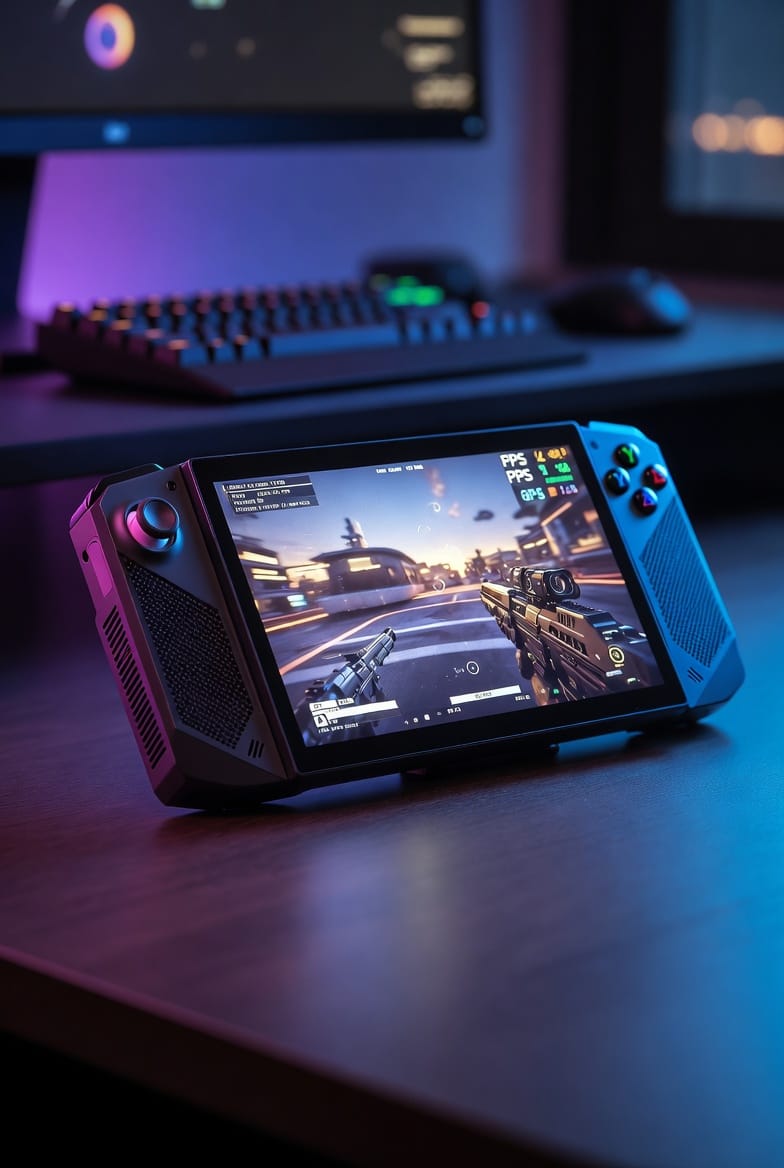
Just a few years ago, the idea of playing AAA PC games at 1080p on a handheld felt like wishful thinking. Battery life was awful, performance was compromised, and “portable PC gaming” sounded more like a tech demo than a real category. Fast-forward to 2026, and the story has changed—dramatically.
The handheld gaming revolution isn’t just back. It’s entering its second, more mature phase.
Beyond the Steam Deck Moment
The original Steam Deck cracked the door open. It proved there was real demand for a handheld PC that could run actual PC games, not mobile ports or cloud streams. But that first wave came with trade-offs: chunky designs, aggressive fan curves, and performance that often required dialing settings down.
Now, everyone is whispering about a “Steam Deck 2”, but the real action is already happening elsewhere.
Ryzen Z2 Changes the Game
The latest updates to the ROG Ally and Lenovo Legion Go powered by AMD’s Ryzen Z2 chips represent a meaningful leap forward—not just incremental gains. These chips are delivering:
- Desktop-class performance per watt
- Smooth 1080p gameplay in modern AAA titles
- Surprisingly usable battery life, even under sustained load
What’s different this time is efficiency. Zen architecture refinements, improved RDNA graphics, and smarter power scaling mean these handhelds aren’t just brute-forcing performance anymore—they’re balancing it.
Three years ago, playing a demanding title like Cyberpunk 2077 on a handheld meant low settings and a charger nearby. Today, medium-to-high settings at native resolution are not just playable—they’re enjoyable.
Handheld PCs Are No Longer a Compromise
The biggest shift isn’t raw performance—it’s confidence.
You’re no longer buying a handheld PC as a novelty or secondary experiment. These devices now feel like legitimate gaming PCs that happen to fit in a backpack. Dock them, and you’ve got a compact desktop. Undock them, and you’re gaming on the couch, in bed, or on a flight.
Manufacturers are also learning fast:
- Better thermals without jet-engine fans
- Higher-quality displays with VRR
- More thoughtful control layouts and modular options
This generation feels designed, not hacked together.
The 2026 Library Is the Real Tipping Point
Hardware alone doesn’t trigger revolutions—software does.
By 2026, PC game libraries are increasingly optimized for scalable performance. Developers now expect games to run across desktops, laptops, cloud systems, and handheld PCs. Upscaling, frame generation, and dynamic resolution are standard tools, not edge cases.
That means:
- Fewer compromises when gaming on handheld
- Better battery efficiency by default
- Launch-day support that doesn’t feel like an afterthought
If you’ve been on the fence, this is likely the year where handheld PC gaming stops feeling like “early adoption” and starts feeling like the smart move.
A Second Wind, Not a Second Chance
This isn’t a reboot of handheld gaming—it’s a refinement.
The first wave proved demand. The second wave is proving sustainability. With Ryzen Z2 chips, stronger competition, and a library that finally matches the hardware, handheld PCs are evolving into a permanent pillar of gaming—not a niche.
If you skipped the first generation, 2026 might be your moment.