The Nerve System of the Autonomous Era: Why High-Speed Interconnects Are the Unsung Heroes of ADAS and Connected Cars
As vehicles evolve from simple transportation to advanced computational hubs, the demand for data bandwidth is skyrocketing. Advanced Driver Assistance Systems (ADAS) rely on an intricate array of sensors to perceive the world.
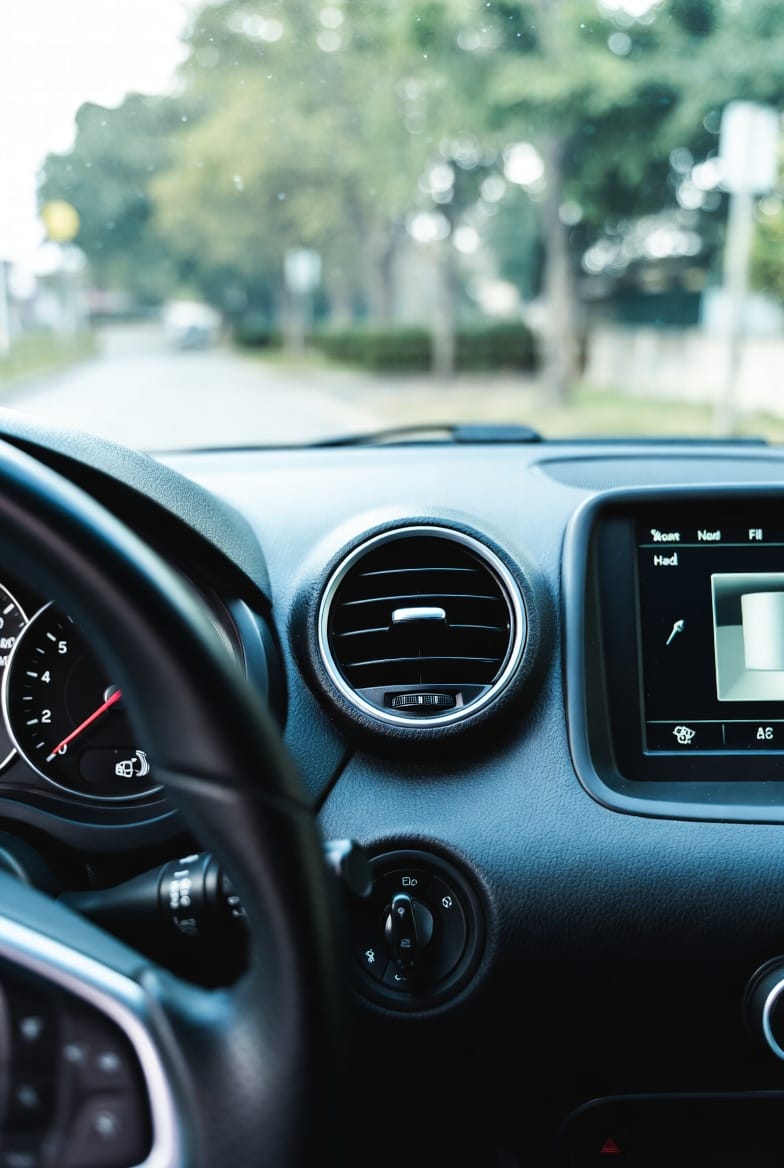
The modern automobile is undergoing its most significant transformation since the invention of the assembly line. We are witnessing the birth of the Software-Defined Vehicle (SDV)—a mobile data center where performance is measured not just in horsepower, but in Gigabits per second (Gbps) and tera-operations per second (TOPS).
This evolution is driven primarily by the rapid advancement of Advanced Driver Assistance Systems (ADAS). Features like adaptive cruise control, lane-keeping assist, and automatic emergency braking are no longer premium luxuries; they are becoming standard safety imperatives, paving the way toward full vehicle autonomy.
But behind the scenes, this surge in intelligence is creating a massive logistics problem. ADAS sensors generate an unprecedented torrent of raw data that must be transported across the vehicle instantly, reliably, and without interference. This is the story of the unsung heroes of the automotive revolution: high-speed interconnects and shielded cable assemblies.
The Perception Problem: Mapping the Torrent of Sensor Data
For a vehicle to make a split-second driving decision, it must first "see" its environment with absolute clarity. It does this through a combination of complementary sensor technologies, a process known as sensor fusion:
1. Automotive Cameras (Embedded Vision)
Cameras provide the high-resolution, color-accurate visual information needed to classify objects: traffic signs, pedestrians, lane markings, and traffic light colors. However, this high fidelity comes at a price. A single 8-megapixel automotive camera streaming at 30 frames per second can generate raw data rates exceeding 2 Gbps. A modern vehicle equipped with a surround-view system and forward-facing cameras can easily have over six of these high-bandwidth devices on board.
2. Automotive Radar (Radio Ranging)
Radar excels at detecting the range, velocity, and relative angle of objects, even in poor weather or direct sunlight where cameras struggle. While traditional radar data rates are lower, new high-resolution Imaging Radar systems are generating complex data sets that require significantly higher bandwidth to reach the central fusion computer without introducing latency.
3. LiDAR (Light Detection and Ranging)
LiDAR is the final piece of the perception puzzle, using laser pulses to create a precise, three-dimensional "point cloud" of the vehicle's surroundings. This 3D map is vital for precise spatial awareness and redundancy. Because LiDAR provides such dense spatial data, its output is incredibly bandwidth-intensive, with some high-fidelity sensors requiring dedicated links of several hundred megabits to well over a gigabit per second.
The Network Bottleneck: Moving Beyond Legacy Architectures
In traditional vehicles, the network architecture was built on protocols like CAN (Controller Area Network) and LIN (Local Interconnect Network). These are robust, deterministic, and reliable, but they are incredibly slow, topping out at around 1 Mbps (or 5 Mbps for CAN-FD).
Attempting to run a modern 2 Gbps camera feed over a CAN bus is like trying to connect a standard water hose to a fire hydrant. The architecture simply cannot handle the load.
To solve this, the automotive industry is rapidly transitioning toward a zonal architecture underpinned by two core high-speed physical layers: Automotive Ethernet and SerDes.
Automotive Ethernet (The Backbone)
Automotive Ethernet (standards like 100BASE-T1 and 1000BASE-T1) is the scalable backbone of the modern vehicle. It is deterministic, uses a single twisted-pair of wires to save weight, and currently supports speeds up to 10 Gbps (Multi-Gig Ethernet), with roadmaps extending to 25 Gbps and beyond. It is ideal for connecting zonal controllers, infotainment hubs, and central compute modules.
SerDes (The Dedicated Link)
SerDes (Serializer/Deserializer) technologies (like FPD-Link, GMSL, and MIPI A-PHY) are point-to-point specialized links designed for asymmetrical data flow. They are the perfect solution for ADAS: they take the parallel raw data from a camera sensor, serialize it for high-speed transmission over a single coax or differential pair cable, and deserialize it at the ECU. SerDes links currently dominate sensor-to-ECU connectivity, supporting speeds exceeding 12 Gbps per link.
The Critical Components: Unlocking 40 Gbps Performance
This new high-speed data architecture is only as strong as its weakest link. A 10 Gbps Ethernet signal will fail if the connector cannot handle the frequency, or if the cable assembly acts like an antenna, picking up noise from the ignition system.
This is where advanced interconnect design becomes critical:
High-Speed Automotive Connectors
Next-generation automotive connectors are highly engineered devices. They must maintain a precise, constant impedance (usually 50 ohms for coax or 100 ohms for differential pairs) throughout the entire mating cycle to prevent signal reflections and data loss.
Connector giants like Molex (with HSAutoLink), TE Connectivity (with MATE-AX), and Rosenberger (with HFM and FAKRA) are developing ruggedized, miniaturized form factors that can handle up to 20 GHz of bandwidth, support data rates of 40 Gbps, and still withstand the punishing vibration, thermal shock (often -40°C to +125°C), and sealing requirements of an automotive environment.
Shielded Cable Assemblies and EMI Immunity
The inside of a car is a chaotic environment for electromagnetic signals. Electric vehicle motors, high-voltage battery lines, ignition coils, and wireless modems all create significant Electromagnetic Interference (EMI).
To protect sensitive ADAS data streams, cable assemblies must possess robust, 360-degree shielding. This shield acts as a Faraday cage, keeping the high-frequency data signals in the cable and keeping external noise out. Advanced shielded cable assemblies—whether coaxial or Shielded Twisted Pair (STP)—are designed to meet stringent Electromagnetic Compatibility (EMC) standards like CISPR 25, ensuring that the ADAS system operates flawlessly without interfering with other vehicle electronics.
The Road to 2030 and Beyond
As vehicles adopt Level 3+ autonomy, the trend toward centralizing computational power will only accelerate. The "nerve system" of high-speed interconnects will become increasingly dense and complex. We are already looking toward technologies like optical interconnects to handle future terabit-level data flows, offering complete EMI immunity and further weight savings.
The future of the #ConnectedCar will be defined by its ability to perceive, analyze, and react to the world instantly. While the cameras and AI algorithms get the attention, the safe operation of these vehicles rests entirely on the robust, reliable performance of the unsung heroes—the high-speed connectors and shielded cables that make it all possible.