The Titanium Exit Strategy? Why the Galaxy S26 Ultra Might Revert to Aluminum
Is Samsung ditching titanium? Latest leaks for the Galaxy S26 Ultra suggest a pivot back to aluminum to combat thermal throttling and rising component costs. We break down the "Durability vs. Weight" war and what it means for your next flagship.
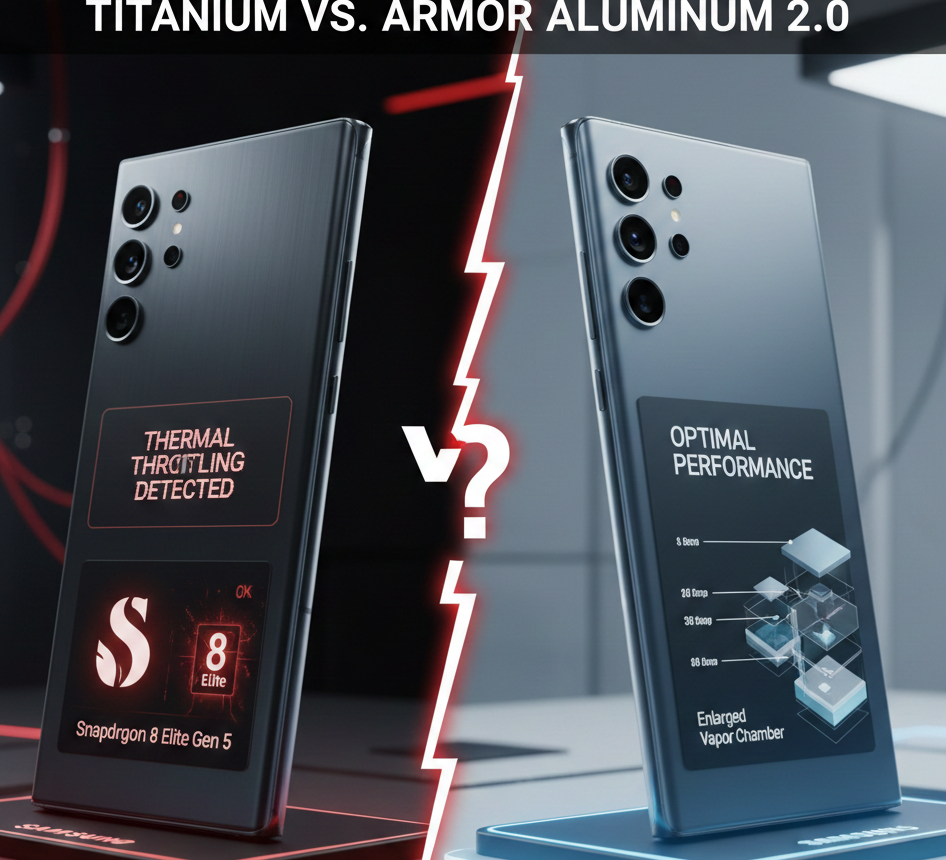
The smartphone world is currently embroiled in a "Material War." Just as titanium became the gold standard for flagship durability, fresh supply chain leaks suggest Samsung is preparing a strategic pivot. For the upcoming Galaxy S26 Ultra, the internal buzzword isn't "Titanium"—it’s Armor Aluminum 2.0.
This rumored shift has ignited a massive debate across tech subreddits and search engines: Is this a cost-cutting downgrade, or a necessary evolution for next-gen performance?
The Leak: Bye-Bye Titanium branding
Well-known industry insiders, including Ice Universe, have noted that leaked color palettes for the S26 Ultra—reportedly featuring Black Shadow, White Shadow, Galactic Blue, and Ultraviolet—conspicuously drop the "Titanium" prefix used in the S25 series. This nomenclature shift is the strongest evidence yet that Samsung is moving toward a new chassis material.
Aluminum vs. Titanium: The Technical Breakdown
To understand why Samsung might make this move, we have to look at the physics of 2026 flagship hardware.
| Feature | Titanium (Grade 5) | Armor Aluminum 2.0 |
| Thermal Conductivity | Lower (Retains Heat) | Higher (Superior Dissipation) |
| Weight | Heavier (~233g on S25U) | Lighter (Targeting <220g) |
| Production Cost | High (Requires CNC Machining) | Medium (Sustainable & Efficient) |
| Durability | Extreme (Harder to Scratch) | High (Optimized for Impact) |
1. The Thermal Catalyst: Snapdragon 8 Elite Gen 5
The primary driver for this change isn't just aesthetics—it’s the Snapdragon 8 Elite Gen 5. Early benchmarks show this 3nm (and potentially 2nm) monster pushing clock speeds toward 4.74 GHz.
While titanium feels premium, it is notoriously poor at dissipating heat compared to aluminum. By utilizing an Armor Aluminum 2.0 frame paired with an enlarged vapor chamber, Samsung can effectively turn the entire phone's frame into a heatsink. This prevents the aggressive thermal throttling that has frustrated power users during long gaming sessions or or AI-intensive tasks.
2. Fighting "Ultra" Fatigue: The Weight Equation
The Galaxy S25 Ultra was a beast, but at nearly 233 grams, it pushed the limits of one-handed usability. With rumors of the S26 Ultra sporting a 6.9-inch Dynamic AMOLED 2X display, Samsung needs to shave weight elsewhere to keep the device ergonomic.
Switching back to a high-tensile aluminum alloy could bring the S26 Ultra down to a much more manageable weight, addressing one of the most common complaints in user feedback loops over the past two years.
3. The Margin Squeeze
Component costs are skyrocketing. With the price of advanced silicon and periscope camera modules rising, moving away from the expensive titanium refinement process allows Samsung to maintain its $1,299 MSRP without sacrificing the internal specs that matter most—like the rumored 10-bit display panel and UFS 5.0 storage.
A Divided Community
On r/Android, the "Durability vs. Performance" war is in full swing.
- The Pragmatists: "I’ll take a lighter, cooler phone over a 'prestige' metal any day. Titanium was always a marketing gimmick."
- The Loyalists: "If I’m paying $1,300, I want the toughest material on the market. Aluminum feels like a step backward to the S21 era."
A Smart Pivot?
If the leaks hold true, the Galaxy S26 Ultra represents a shift from luxury-first to performance-first design. By prioritizing thermal management for its new AI-heavy OS (One UI 8), Samsung is betting that users value a phone that stays cool and light more than one that carries a "Titanium" badge.
What do you think? Does the loss of titanium make the Ultra feel "less premium," or are you ready for a lighter, faster flagship?