Unleashing Creativity: The Power of Makerspaces
Makerspaces are creative hubs with tools like 3D printers, CNC machines, and laser cutters. They empower everyone to prototype, craft, and learn. Discover why these workshops are essential for innovation!
Makerspaces are revolutionizing how people create, innovate, and collaborate. These multi-media workshops are hubs of creativity, offering access to cutting-edge tools and equipment that empower community members to turn their ideas into reality. Whether you’re a hobbyist, entrepreneur, or student, a makerspace provides the resources and training needed to bring your visions to life.
What is a Makerspace?
A makerspace is a collaborative workspace equipped with an array of tools, from small hand tools to large-scale machines, that might not fit in a typical home workshop. These spaces are designed to foster innovation by providing access to equipment like 3D printers, CNC machines, and laser cutters, along with comprehensive training to ensure safe and effective use. Makerspaces are more than just workshops; they’re communities where ideas are shared, skills are honed, and creativity knows no bounds. Whether you’re prototyping a product, crafting art, or exploring a new hobby, makerspaces offer the tools and support to make anything you can imagine.
Why Makerspaces Matter
Makerspaces democratize access to advanced technology, making it affordable for individuals who might not have the resources to own such equipment. They also foster a sense of community, where makers can learn from one another, collaborate on projects, and inspire new ideas. These spaces are ideal for a variety of use cases, including:
- Prototyping: Entrepreneurs and inventors can create and test product designs.
- Education: Students learn STEM skills through hands-on projects.
- Art and Design: Artists use tools like laser cutters to craft intricate pieces.
- Hobby Projects: From custom furniture to robotics, hobbyists bring personal projects to life.
Must-Have Tools in a Makerspace
To ensure a makerspace is versatile and capable of supporting a wide range of projects, certain tools are essential. Here are three must-have machines that every makerspace should include:
- 3D Printer
- Why It’s Essential: 3D printers allow users to create complex, custom objects layer by layer from digital designs. They’re perfect for prototyping, crafting models, or producing functional parts for robotics or gadgets.
- Use Cases: Printing prototypes for product development, creating cosplay accessories, or designing educational models for classrooms.
- Key Features: Look for printers with a large build volume (e.g., 200 x 200 x 200 mm), compatibility with materials like PLA, ABS, and PETG, and user-friendly software for beginners and experts alike.
- CNC Machine
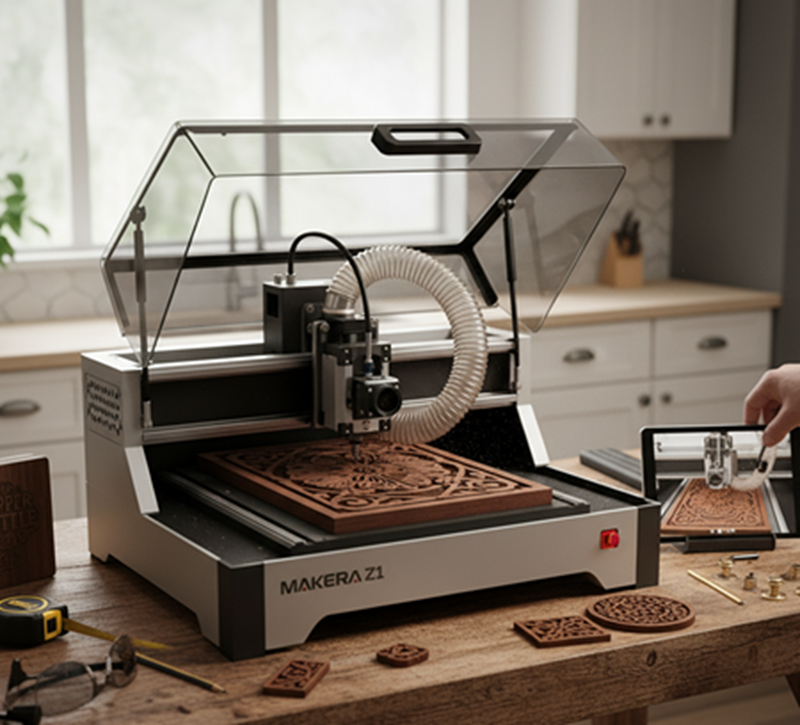
- Why It’s Essential: Computer Numerical Control (CNC) machines carve precise designs into materials like wood, metal, or plastic. They’re ideal for creating detailed components, furniture, or signage with high accuracy.
- Use Cases: Crafting custom furniture, engraving metal parts for engineering projects, or producing intricate wooden art pieces.
- Key Features: A robust CNC router with a spacious work area (e.g., 4x4 feet), support for multiple materials, and easy-to-use CAD/CAM software to streamline the design process.
- Laser Cutter/Engraver
- Why It’s Essential: Laser cutters precisely cut or engrave materials like acrylic, wood, leather, and glass, enabling intricate designs for art, jewelry, or product branding. They’re versatile and accessible for beginners yet powerful for advanced users.
- Use Cases: Creating custom signage, etching personalized gifts, or cutting precise parts for model building.
- Key Features: A laser cutter with at least 40W power, a large bed size (e.g., 900 x 600 mm), and safety features like enclosed designs and ventilation systems.
Getting Started in a Makerspace
Most makerspaces offer affordable training programs to teach users how to safely operate equipment. These sessions cover everything from basic machine operation to advanced design software, ensuring that even beginners can dive into projects with confidence. Membership models vary, with some spaces offering pay-per-use options or monthly subscriptions for unlimited access.
To find a makerspace near you, check local libraries, universities, or community centers, as many host these creative hubs. Online platforms like makerspaces.com also provide directories of global makerspaces.