Analyzing the Role of the Server Backplane in Modern Enterprise Data Center Environments
Deconstruct the vital role of the server backplane in modern data centers. Learn about passive vs active routing, blind-mate mechanics, and high-frequency power distribution.
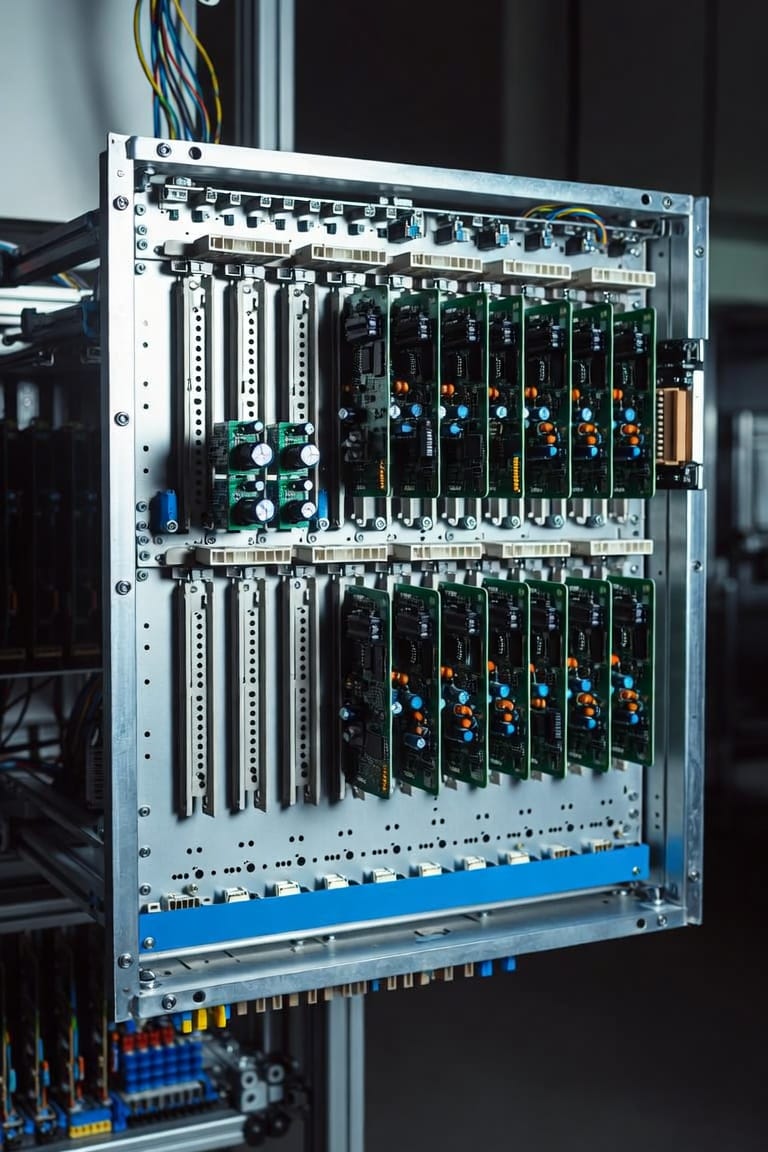
In an era dominated by hyper-scale cloud applications and demanding data processing, the physical architecture of enterprise IT infrastructure must be optimized for speed, reliability, and serviceability. At the center of this modular engineering approach is the server backplane. Acting as a centralized communication matrix inside the server chassis, this specialized circuit board handles all data routing and power delivery, eliminating internal cable messes and ensuring continuous data flow across the enterprise network.
Using a dedicated backplane in server engineering offers major advantages over traditional point-to-point cable wiring. In high-density rackmount hardware, space is at a premium. Running individual data and power cables to dozens of storage drives or server nodes chokes off internal airflow, leading to localized hotspots and component failure. A server backplane solves this by consolidating all interconnects onto a rigid, multi-layered PCB situated at the back of the device compartment. This setup delivers several clear advantages: Improved Thermal Management—with cables out of the way, cooling fans can push unobstructed air directly across high-heat components like processors and RAM modules. True Hot-Swappability—backplanes feature precision-aligned, blind-mate connectors; if a hard drive or compute node fails, technicians can pull the bad component out and slide a replacement in without powering down the entire system. High Manufacturing Consistency—eliminating manual cable installation removes human assembly errors, resulting in highly repeatable electrical performance across mass-produced server lines.
Modern backplanes do more than just hold connectors in place; they must route massive amounts of clean power alongside ultra-fast data signals. A typical enterprise backplane integrates a heavy-copper power bus layer to distribute stable voltages to power-hungry storage arrays and accelerator cards. Simultaneously, the data layers route high-speed interfaces like NVMe, PCIe, and SAS through low-loss dielectric laminates. By controlling trace geometries and minimizing layer-to-layer transitions, backplane designers ensure that data moves cleanly from individual processing nodes out to the broader network infrastructure.