Beyond Copper: The Rise of Co-Packaged Optics in Modern Data Centers
As data speeds climb toward 400G and 800G, physical copper is struggling to keep up. Let's look at how optical transceivers and co-packaged optics are taking over.
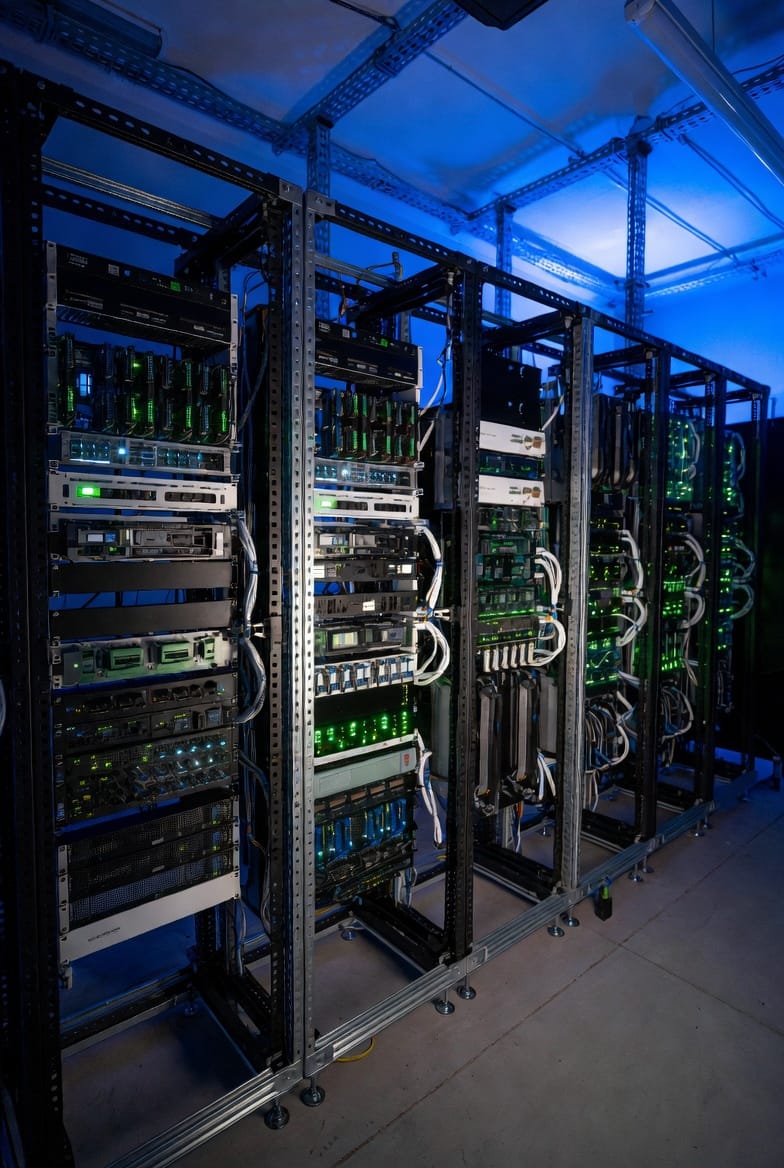
For decades, copper cables have been the default choice for connecting servers within a data center rack. Copper is cheap, durable, and easy to route. However, as data center network backbones transition to 800G and 1.6T architectures, copper is running out of headroom.
High-frequency electrical signals suffer from massive signal loss over even short distances. To keep data moving without generating excessive heat, the industry is transitioning to optical interconnects.
Silicon Photonics & Co-Packaged Optics (CPO)
Traditionally, electrical signals travel from the processor across the motherboard to a pluggable optical transceiver (like an OSFP module) sitting on the front panel, where the electrical signal is converted into light.
At 1.6 Terabits per second, the electrical loss of traveling across the motherboard is too high. The industry is solving this with Co-Packaged Optics (CPO).
Traditional Transceiver Routing:
[ Processor ] ──── (High-Loss Electrical Link) ──── [ Front Panel Transceiver ] ─── (Fiber)
Co-Packaged Optics (CPO):
┌───────────────────────────────┐
│ [ Processor ] ── [ Optical Engine ] │ <── Optoelectronic conversion occurs on-package
└─────────────────────────────────────┘
│
▼ (Low-Loss Fiber Optic Cable directly to the backplane)
By mounting the optical engines directly onto the same organic substrate as the processor, the electrical path is reduced to mere millimeters. The signal is converted into light immediately next to the silicon chip, saving power, reducing heat, and allowing data center networks to scale effortlessly.