Choosing Between Screw, Spring, and Barrier Terminal Blocks
: Terminal blocks are the interface between field wiring and control electronics. We analyze the mechanical advantages of spring-cage vs. screw-type blocks to help you select the right solution for high-vibration and high-maintenance environments.
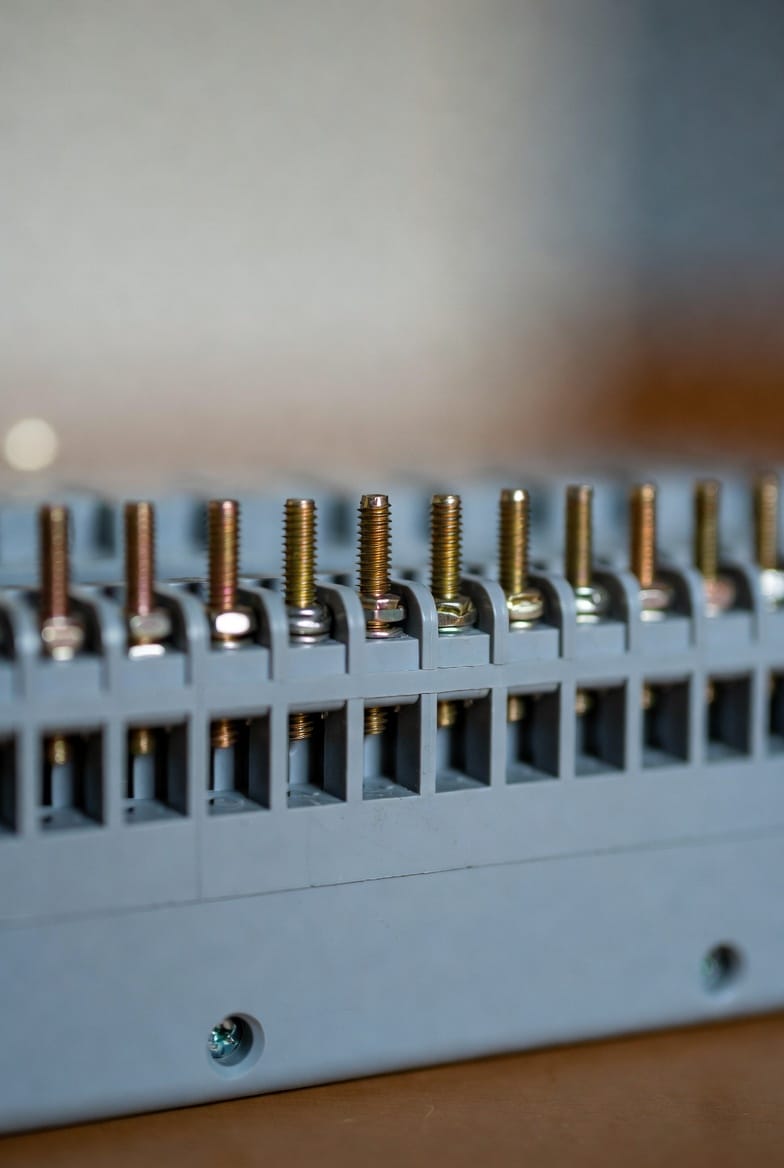
Industrial Interconnects: The Terminal Block Deep Dive
In industrial automation and power distribution, the terminal block is a fundamental component. While it may seem like a simple mechanical clamp, the choice of termination technology—screw-type, spring-cage, or barrier strip—can significantly impact the long-term reliability and maintenance costs of a system. This article explores the engineering trade-offs of each style to ensure your field wiring remains secure under all operating conditions.
1. Screw-Type Terminal Blocks: The Classic Standard
Screw-type blocks utilize a threaded screw to compress a wire against a conductive busbar. They are the most common choice due to their familiarity and high clamping force.
- Mechanical Advantage: They can accommodate a wide range of wire sizes and are ideal for high-current applications where a gas-tight, high-pressure connection is required.
- The Risk: In environments with constant vibration (such as near motors or on mobile equipment), screws can slowly back out over time. This leads to high contact resistance, heating, and eventual failure. Regular maintenance to "re-torque" these connections is often mandatory.
2. Spring-Cage (Push-In) Technology
Spring-cage terminals use a pre-loaded stainless steel spring to hold the wire against the current bar.
- Vibration Resistance: Unlike screws, the spring provides a constant, dynamic force. If the wire shifts or the metal expands due to heat, the spring adjusts automatically. This makes them virtually maintenance-free and the preferred choice for rail and maritime applications.
- Efficiency: Push-in variants allow for tool-less installation of ferruled wires, drastically reducing assembly time in large control panels.
3. Barrier Strips for High Voltage and Safety
Barrier strips feature a raised plastic wall between each terminal. These are designed specifically to prevent accidental shorts and to provide increased "creepage and clearance" distances. They are often used in power supplies and heavy machinery where "ring" or "spade" tongue terminals are preferred over bare wire to ensure the connection cannot physically pull out of the block.