Crimp vs. Solder: Engineering the Most Reliable Wire Termination
Choosing between crimping and soldering isn't just about preference; it's about physics. We dive into the mechanical and electrical factors that determine which termination method is superior for your specific environmental and logistical constraints.
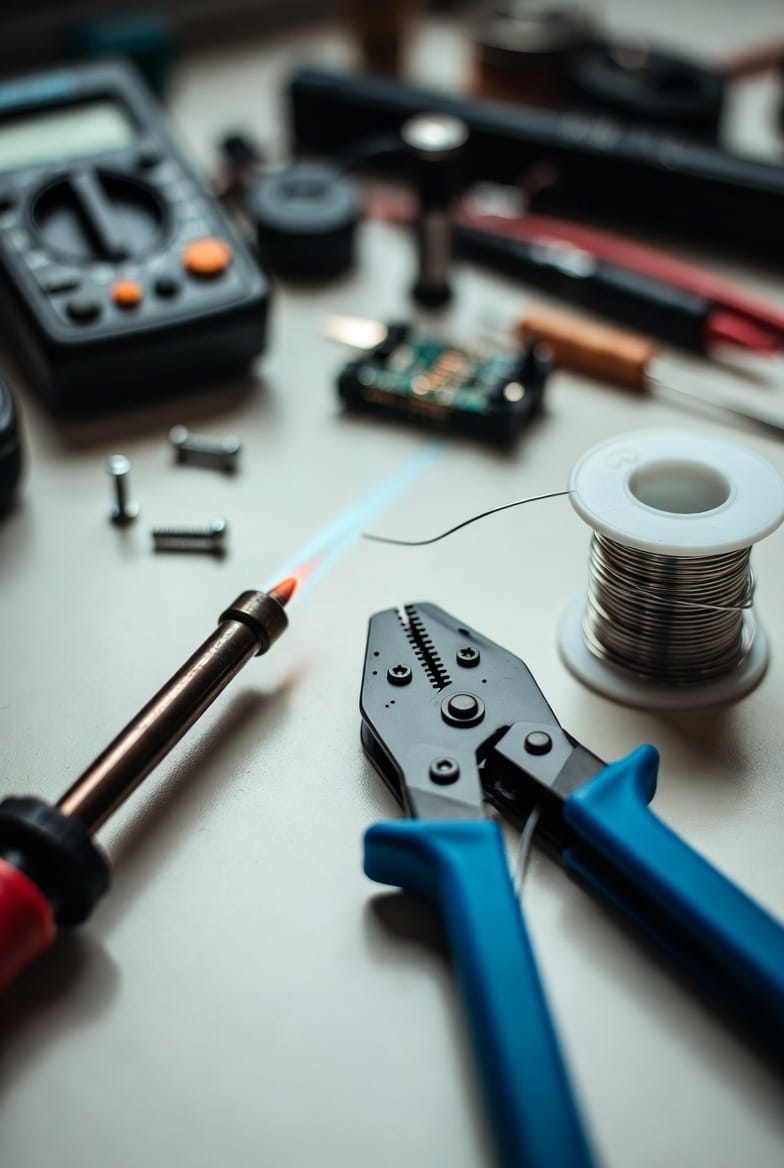
The Science of Connection: Crimp vs. Solder
The debate between crimping and soldering is central to electronic assembly. While both methods serve to join a wire to a terminal, they rely on different physical principles and offer distinct advantages. Selecting the wrong one can lead to premature failure, particularly in high-vibration or high-temperature environments. This guide explores why and when to use each method to ensure long-term system stability.
The Mechanics of the Crimp: A Cold Weld
A proper crimp is essentially a "cold weld." When a terminal is compressed onto a stranded wire using a precision-engineered tool, the metal of the terminal and the wire strands deform together. This process breaks down surface oxides and creates a gas-tight joint with extremely low resistance. Because there is no heat involved, there is no "heat-affected zone" where the wire becomes brittle.
The primary advantage of crimping is its consistency and vibration resistance. Most professional crimp terminals include an "insulation support" barrel that grips the wire’s outer jacket, preventing the wire from flexing at the electrical connection point. This is why crimping is the mandated standard for aerospace, automotive, and industrial robotics industries.
The Precision of the Solder Joint
Soldering creates a metallurgical bond using a filler metal (solder) to join the wire and terminal. It is an excellent choice for low-volume prototyping or when a specific connector doesn't have an affordable professional crimp tool available. However, soldering has a significant mechanical drawback known as "wicking." Solder travels up the stranded wire under the insulation through capillary action, creating a stiff section. In a high-vibration environment, this creates a "stress riser" where the wire is likely to snap after repeated movement.
Comparative Analysis: Logistical and Environmental Factors
When deciding on a termination strategy, consider the following:
- Production Volume: Crimping is significantly faster in production environments. Once a tool is set up, a technician can crimp a terminal in seconds with high repeatability.
- Field Repair: Soldering is often easier to perform in the field with a portable iron, whereas high-quality crimp tools can be expensive and bulky.
- Heat Sensitivity: If the connector housing is made of a low-temp plastic, the heat from soldering can warp the housing, leading to misalignment. Crimping is a room-temperature process that eliminates this risk.
Industrial Example: High-Current Power Delivery
Consider a 100A battery connection in an electric vehicle. A soldered lug might seem secure, but the high current can generate enough heat through resistive losses to soften the solder, eventually leading to a catastrophic mechanical failure. A hydraulic crimp on a heavy-gauge lug creates a solid block of copper that can handle thermal cycling without any degradation, proving why mechanical compression is superior for power electronics.