Front Flip vs. Back Flip FFC FPC Connectors: Which Lock Type Offers Better Retention and Ease of Assembly?
Don't let a loose FPC ruin your yield. We break down the mechanical differences between Front Flip and Back Flip locks for high-density 2026 electronics and automotive modules.
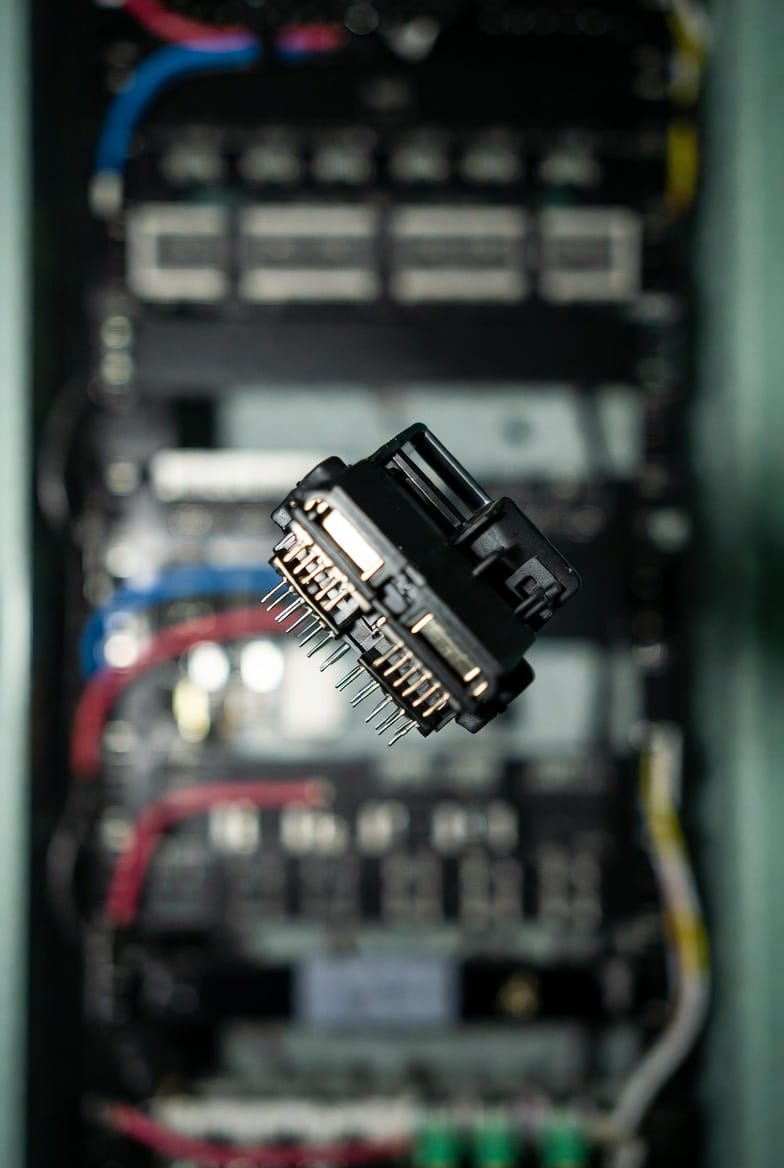
In the fast-paced world of hardware assembly, the decision between a Front Flip (Front-lock) and a Back Flip (Rotary Backlock) FPC connector is often reduced to "whatever fits the footprint." However, this choice dictates your assembly yield, your field failure rate, and how your device handles drop-test impacts. As we enter 2026, the industry is increasingly leaning toward the Back Flip for high-reliability applications, and the reasons are grounded in fundamental mechanical physics.
The Front Flip: Intuition vs. Fragility
The Front Flip actuator is located on the mating side (the cable entry side). When the operator slides the FPC into the "throat" of the connector, they flip the lever down to secure it.
- The Pro: Intuition. For manual assembly lines, this is the most natural motion. The operator can see the cable enter and immediately close the lock. It’s also generally faster for high-volume consumer goods where assembly speed is the primary KPI.
- The "Fly-off" Risk: Because the hinge is located at the point of entry, any upward tension on the FPC cable acts as a lever against the actuator. In a drop event, if the cable is tugged vertically, it can literally snap the actuator off its plastic hinges. If your device is a handheld console or a rugged industrial tablet, a Front Flip connector is a significant point of failure.
The Back Flip (Rotary Backlock): Mechanical Superiority
In a Back Flip design, the actuator hinge is located at the rear of the connector. The cable is inserted, and then the lever is flipped at the opposite end.
- The "Toggle" Effect: This is the game-changer. When you pull on the FPC in a Backlock design, the tension actually pulls the cable deeper into the locking mechanism. The physical geometry of the lock makes it nearly impossible to pull the cable out without breaking the FPC itself. It transforms the pull-out force into a downward clamping force.
- Space Constraints: Back Flip connectors are often lower in profile because the actuator doesn't sit on top of the mating area. This makes them the go-to for 2026 wearables where every 0.1mm of Z-height is critical.
Assembly Considerations for 2026
In an automated Industry 4.0 factory, the Back Flip is preferred because it allows for a "closed-loop" confirmation of the lock. However, if your PCB layout is incredibly cramped and the connector is placed near a tall component (like an inductor or a shield can), a Back Flip may be impossible to reach. Always ensure there is at least 2mm of "actuator clearance" behind the connector for a technician’s tool or a robotic finger to engage the lock. If you can’t provide that space, you’ll be forced into a Front Flip, in which case you should spec a version with reinforced LCP hinges to mitigate the break-off risk.