ZIF vs. Non-ZIF Connectors in Portable Consumer Electronics
Connector Selection in Compact Electronics
Integrating flexible printed circuits into handheld devices requires reliable board-to-flex connections. Engineers primarily choose between Zero Insertion Force (ZIF) and Non-ZIF (Low Insertion Force) connectors.
Both options interface with bare FPC gold pads, but their locking mechanisms and mechanical characteristics differ substantially.
Zero Insertion Force (ZIF) Connectors
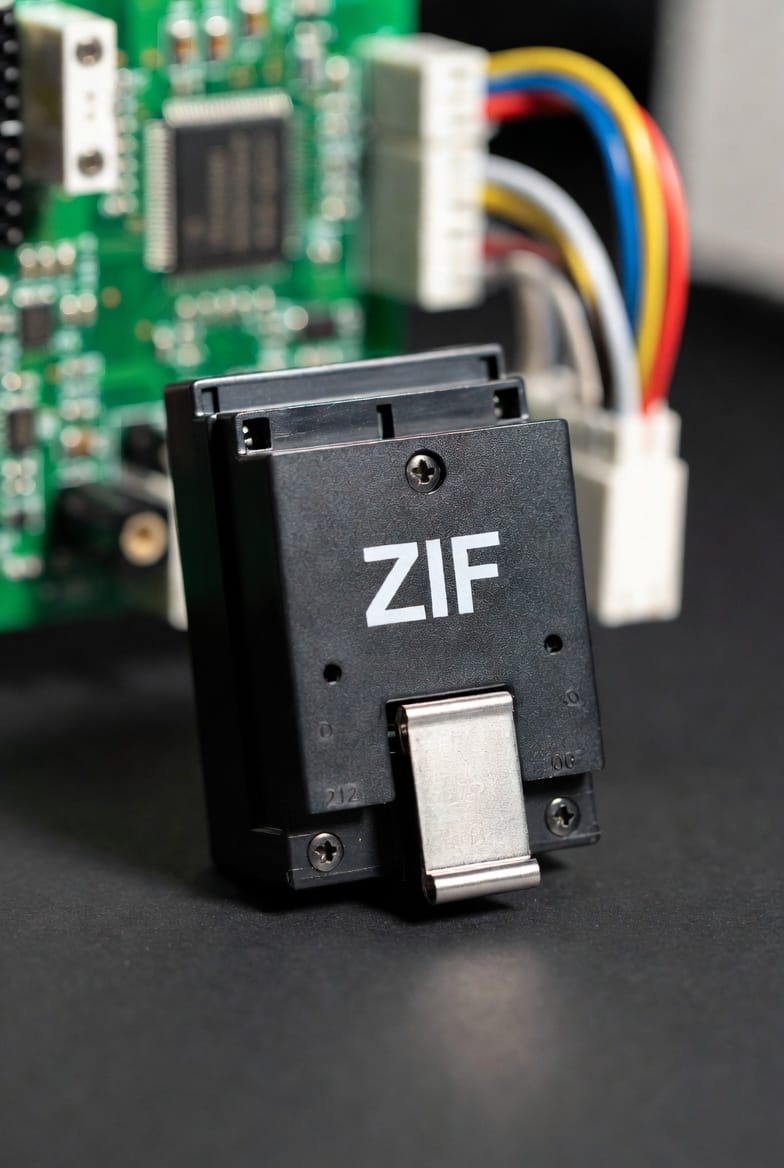
ZIF connectors feature a mechanical actuator—such as a flip-lock slider or back-flip latch—that opens during insertion and clamps down once the flex cable is seated.
- Advantages: Zero resistance during insertion prevents damage to delicate flex contact pads. Clamping mechanisms provide high retention force against pull-out stress.
- Disadvantages: Higher unit cost, larger physical footprint, and risk of actuator breakage during automated or manual assembly.
Non-ZIF Connectors
Non-ZIF connectors rely on friction fit and pre-tensioned metallic spring contacts to grip the inserted FPC tail.
- Advantages: Lower profile, smaller PCB footprint, lower component cost, and faster initial insertion during automated assembly.
- Disadvantages: Insertion force can wear down thin gold plating on the flex tail over multiple insertion cycles, increasing contact resistance over time.