Managing Galvanic and Fretting Corrosion in Interconnects
Why do connectors fail after a year of vibration? We explain the science of fretting corrosion and how dissimilar metals create battery-like reactions that destroy signals.
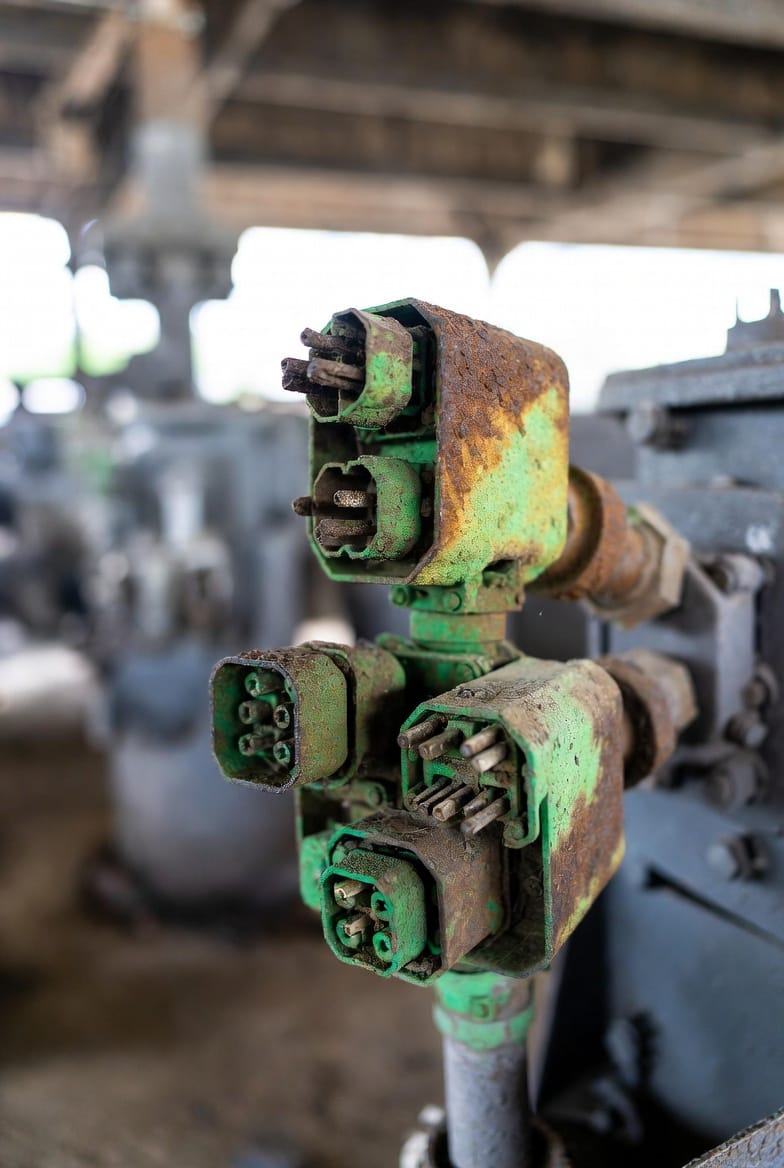
The Silent Failures: Galvanic and Fretting Corrosion
Corrosion is the leading cause of "intermittent" failures in electronics. While we often think of rust, the corrosion that happens inside a connector is much more subtle and can occur even in dry environments. Understanding the two primary types—Galvanic and Fretting—is essential for designing long-lasting systems.
1. Galvanic Corrosion: The Dissimilar Metal Battery
Galvanic corrosion occurs when two different metals (like a gold pin and a tin socket) are in contact in the presence of an electrolyte (even just high humidity). The more "active" metal will donate electrons to the more "noble" metal, causing the active metal to corrode rapidly.
- Prevention: Always mate similar platings (Gold-to-Gold or Tin-to-Tin). If you must mix metals, ensure the environment is hermetically sealed or use a dielectric grease to block moisture.
2. Fretting Corrosion: The Result of Vibration
Fretting is unique to soft metals like tin. Tiny, repetitive movements (from thermal expansion or machine vibration) rub the tin surfaces together. This wears away the top layer, exposing fresh tin which immediately oxidizes. This cycle repeats until a layer of non-conductive "black oxide" builds up.
- Solution: To stop fretting, you must either increase the "normal force" (clamping pressure) to prevent movement or switch to a noble metal plating like gold that does not form an insulating oxide layer.