Smashing the "CAD Wall": How AI is Opening Up 3D Design
Modern 3D printers are incredibly fast and reliable, but designing custom parts still requires a steep learning curve. AI text-to-3D generators are about to change everything.
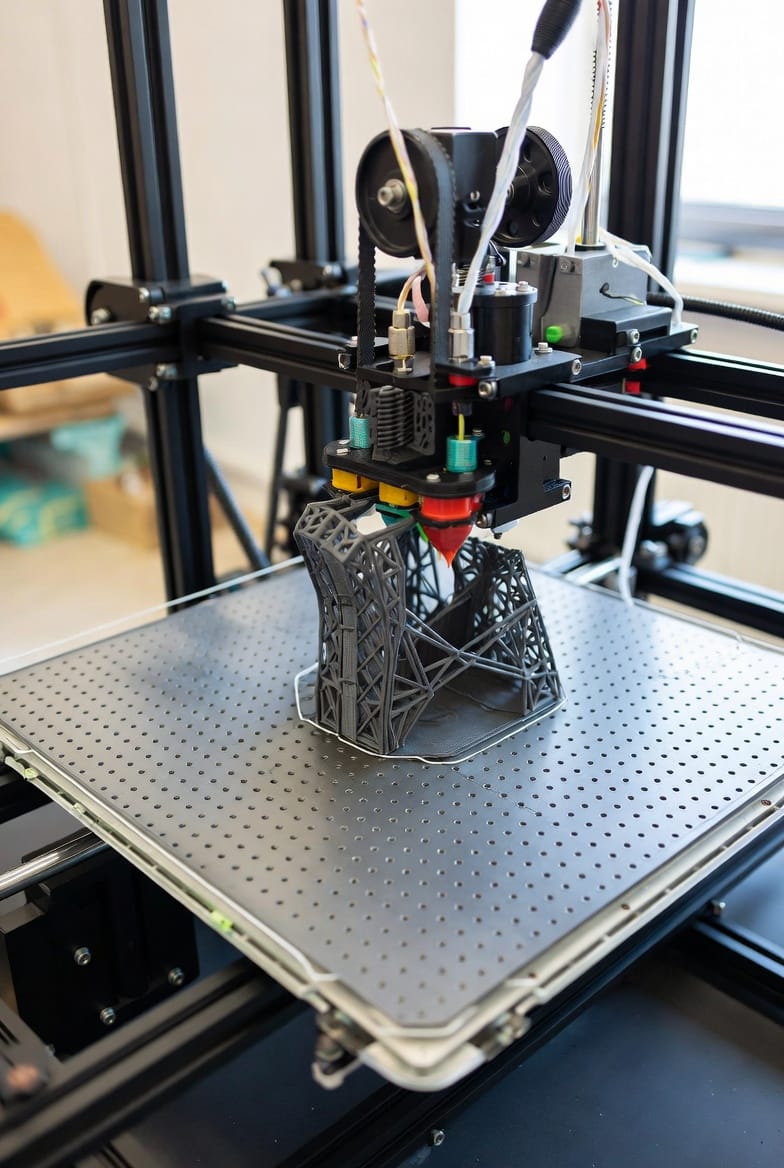
If you hang out in any 3D printing community, you'll see a common trend: people love their high-speed CoreXY printers, but they hate trying to learn parametric CAD. The "CAD wall"—the high entry barrier of learning coordinate systems, constraints, and loft tools in complex programs like Fusion 360 or Onshape—has kept 3D printing firmly in the hands of engineers and dedicated hobbyists.
However, a wave of generative AI text-to-3D tools is starting to break down those barriers.
Bridging the Gap from Text to STL
Instead of requiring a user to manually model every chamfer and sketch plane, neural networks trained on vast datasets of 3D spatial geometry are doing the heavy lifting. By converting plain text descriptions or simple 2D reference images into fully realized, manifold 3D models, these AI engines allow anyone to design custom, functional parts in seconds.
For engineers, these tools are evolving into sophisticated topology optimization assistants. You can specify physical load constraints and attachment points, and the AI will calculate the most lightweight, structurally sound geometry for the task. The output files are clean, water-tight, and ready for your slicer without manual mesh healing.