The 2nm Semiconductor Frontier: Samsung Exynos 2600 and the Fight for Next-Gen Mobile Silicon Leadership
The mobile processor race has officially scaled down to the 2nm node, with Samsung's Exynos 2600 and Qualcomm's Snapdragon 8 Elite Gen 5 pushing efficiency limits.
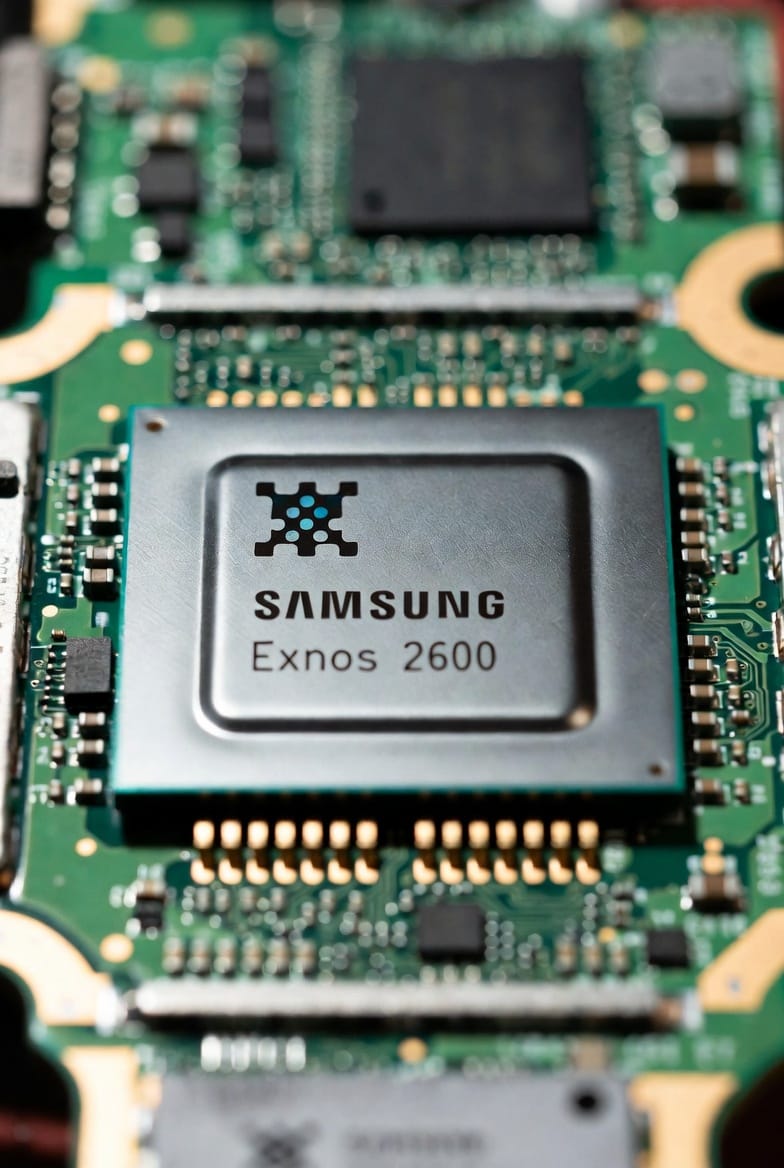
The competitive landscape of flagship mobile semiconductors is centered on a historic manufacturing milestone: the transition down to the 2nm fabrication node. Led by Samsung Semiconductor's official unveiling of the Exynos 2600—the world's first smartphone chipset manufactured on a 2nm Gate-All-Around (GAA) process—this generation represents a massive leap in processing density, thermal efficiency, and on-device compute capability.
Operating on a 2nm GAA architecture allows chip designers to wrap the transistor gate around all four sides of the internal channel. This structure provides significantly tighter control over electrical currents, drastically minimizing static power leakage and lowering overall heat generation compared to older FinFET designs. The Exynos 2600 utilizes this advantage to field a revamped 10-core Arm v9.3 CPU structure that eliminates traditional efficiency cores entirely, opting instead for a broad cluster of highly optimized middle and ultra-cores to deliver a 39% jump in computing performance.
This hardware shrinking is equally critical for the graphics and AI subsystems. Paired alongside upcoming competitors like Qualcomm's Snapdragon 8 Elite Gen 5, these 2nm platforms integrate massive next-generation neural processing units (NPUs). The Exynos 2600 boasts a 113% surge in generative AI computational efficiency, enabling smartphones to run larger, more complex language and multi-modal models completely locally without draining the device's physical battery reservoir.