Vibration-Resistant Floating Board-to-Board Solutions: Essential Features for Automotive Display and Navigation Systems
Road vibration destroys rigid connections. Learn how floating B2B solutions protect automotive navigation and display signals from mechanical failure in the 2026 cockpit.
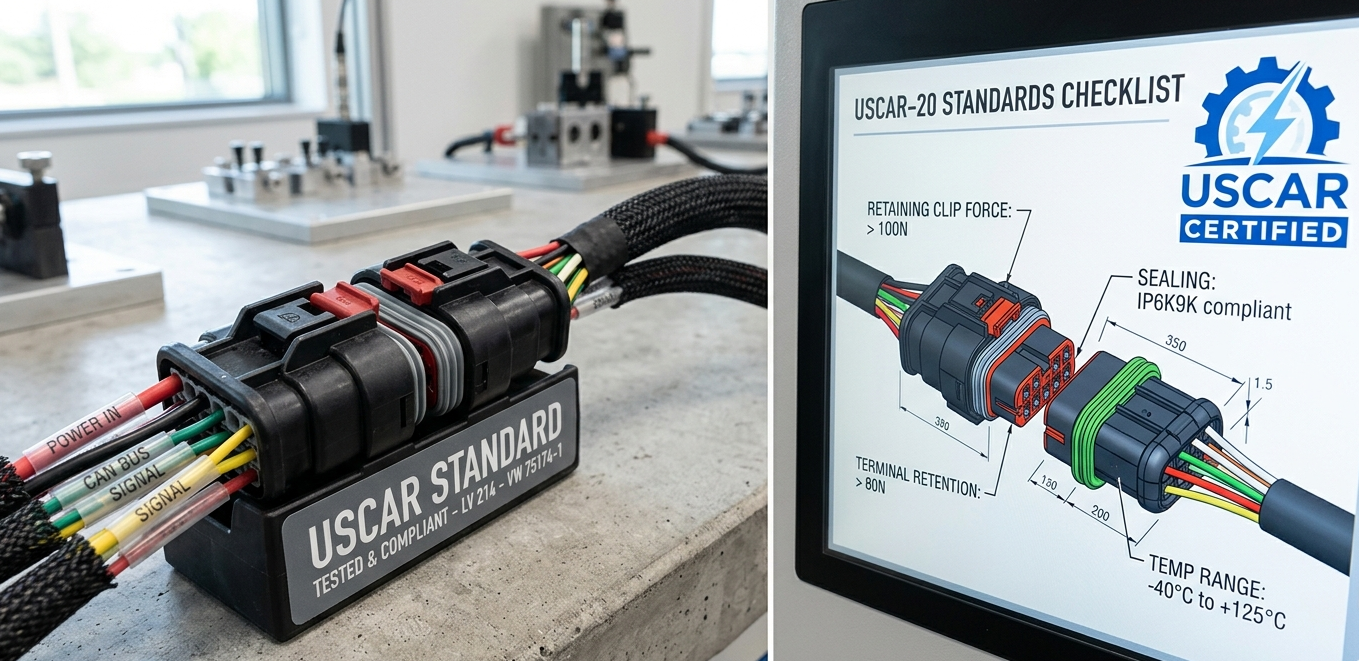
Automotive "infotainment" has transcended the dashboard; in 2026, it is the centerpiece of the vehicle, often spanning the entire width of the interior. These systems must survive 15+ years of constant road vibration, thermal shock, and high humidity. A rigid board-to-board (B2B) connection in this environment is a ticking time bomb. To ensure a vehicle doesn't end up with a "ghosting" display or a rebooting navigation system, engineers are turning to Vibration-Resistant Floating B2B tech.
The "Fretting" Nightmare: The Silent Killer of Plating
When two boards are mated rigidly in a moving vehicle, they are subjected to high-frequency harmonic vibration. This causes "micro-motion" at the contact interface—invisible to the eye but devastating at a molecular level. This leads to fretting corrosion: the constant rubbing wears away the gold plating, exposing the nickel or copper underneath. Once exposed, these base metals oxidize, creating a non-conductive film.
- The Floating Cure: A floating connector decouples the two PCBs. The terminal itself acts as a specialized spring, absorbing the kinetic energy of the car's movement. Because the contact point moves with the vibration rather than resisting it, the microscopic rubbing is eliminated. The electrical path remains stable, maintaining a low contact resistance (typically <30mΩ) even after millions of vibration cycles.
Passing the USCAR-2 Standard
In 2026, automotive connectors are held to the USCAR-2 Class 3 standard. This isn't just a shake test; it’s a brutal combination of vibration and temperature cycling from -40°C to +125°C.
- Two-Point Contacts: Essential for vibration resistance. High-spec floating connectors use a "bifurcated" contact design. If one "finger" of the contact loses pressure during a massive shock event (like a high-speed pothole impact), the second finger remains engaged.
- Housing Material: Standard plastics will become brittle over 15 years of heat. 2026-grade connectors utilize High-Temp LCP (Liquid Crystal Polymer) that maintains its "float" fluidity without deforming or outgassing under the hood.