Why Material Calibration Automation and Universal Standardized Filament NFC Systems Form the Next 3D Printing Frontier
Getting a perfect 3D print shouldn't require endless test blocks. Automated material calibration handles flow rates and temperatures dynamically.
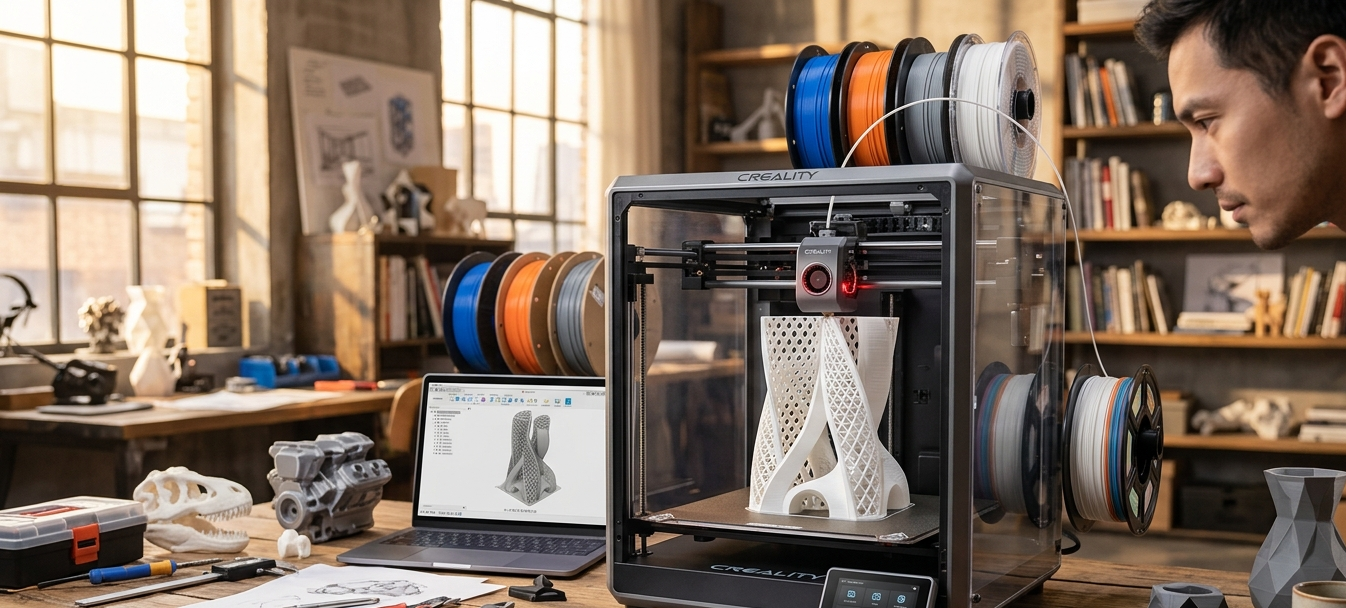
The broader adoption of Fused Deposition Modeling (FDM) has long been hampered by a frustrating variable: material inconsistency. Even when sourcing filament within the exact same plastic category, minor manufacturing variations in physical diameter, optimal extrusion temperatures, and volumetric shrinkage rates require users to spend hours printing manual test models to fine-tune their slicing profiles.
The current engineering push centers on eliminating this human element through automated material calibration routines integrated directly into the printer's firmware. Modern hardware platforms utilize built-in laser depth sensors and high-resolution eddy-current probes located inside the toolhead assembly to dynamically measure the exact extrusion characteristics of a loaded material during the initial print lines.
Concurrently, there is a strong community push for an open, unified material tracking standard utilizing near-field communication (NFC) tags embedded directly inside filament spools. When a spool is mounted, the machine automatically reads precise manufacturing data—including specific glass transition temperatures, cooling requirements, and exact batch flow multipliers. By pairing automated physical measurements with embedded material data, the slicer adjusts its output parameters on the fly, delivering optimal layer adhesion and dimensional accuracy without requiring manual calibration prints.