Powering the AI Boom: A Deep Dive into Connectors Inside GPU Servers
As AI workloads skyrocket, GPU servers require unprecedented levels of power and data throughput. This deep dive explores the specialized, high-performance connectors architecture—from PCIe Gen 6 to high-current busbars—that keep next-gen AI clusters running smoothly without bottlenecking.
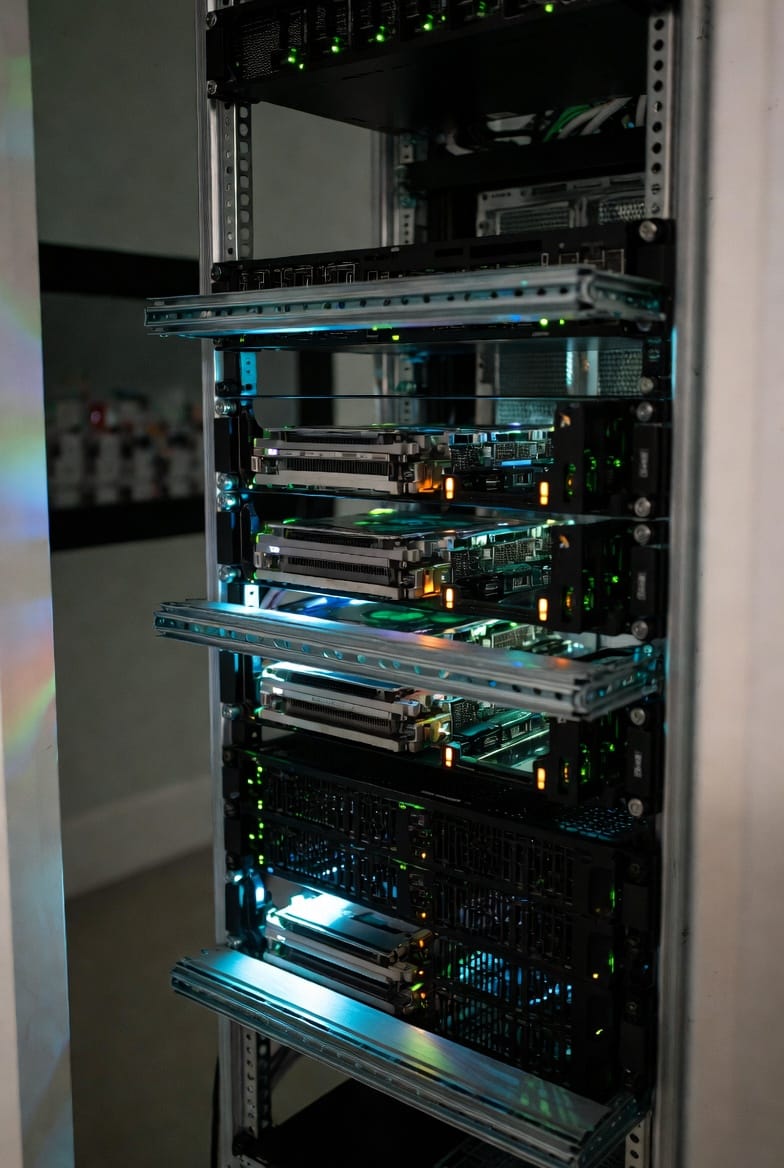
The race for AI dominance isn't just being fought with brilliant algorithms; it’s being fought in the trenches of hardware architecture. When we talk about training massive Large Language Models (LLMs), the spotlight naturally falls on the GPUs themselves.
But what connects these powerhouse chips, delivers massive amounts of electricity, and ensures data moves at lightning speed without degradation?
The unsung heroes are the internal connectors. Inside a modern AI GPU server, traditional cabling simply won't cut it. Let’s break down the specialized connector architecture required to keep next-gen AI infrastructure firing on all cylinders.
1. The Power Demands: Shoveling Watts to the Board
Modern AI GPUs are incredibly power-hungry, with individual accelerators drawing upwards of 700W to 1,200W+ each. Multiply that by eight in a standard server configuration, and you are looking at massive power delivery challenges.
Power Busbar Connectors
To handle hundreds of amperes flowing from the power supply unit (PSU) to the power distribution board, standard cables are replaced by solid copper busbars. Specialized heavy-duty busbar connectors slide directly onto these copper rails. They feature low contact resistance to minimize thermal dissipation and high-temperature resilience to withstand continuous, extreme electrical loads.
High-Current Board-to-Board Connectors
Once power reaches the baseboard, it needs to be routed directly to the GPU modules. Designers utilize blind-mate, high-density power connectors capable of delivering over 100A per pin. These connectors use advanced copper alloys and redundant contact points to ensure a stable voltage plane, preventing catastrophic voltage drops during sudden compute spikes.
2. High-Speed Data Connectors: Crushing the Bottleneck
Powering the GPU is only half the battle; the other half is feeding it data. With the advent of PCIe Gen 6 and specialized proprietary interconnects (like NVIDIA's NVLink architecture), internal data speeds are reaching staggering rates.
Cabled PCIe / Twinaxial Solutions
At 64 GT/s (PCIe 6.0) and beyond, routing signals through standard FR4 PCB traces causes unacceptable signal loss (attenuation). To combat this, server architects use over-the-board cabled solutions.
- Near-Chip Architecture: High-speed twinaxial cable assemblies plug into miniature connectors placed directly next to the GPU socket.
- Direct Routing: These cables bypass the motherboard entirely, routing high-speed data directly to the PCIe slots or external network interfaces (like 800G InfiniBand/Ethernet ports).
High-Density Mezzanine Connectors
The physical GPUs often sit on an accelerator module that plugs into a massive baseboard. This interface relies on ultra-fine pitch, high-density mezzanine connectors. These arrays feature thousands of pins precisely engineered for crosstalk isolation, ensuring that high-frequency data signals don't interfere with neighboring channels.
3. Thermal and Mechanical Challenges
Because GPU servers run exceptionally hot and vibrate under the airflow of massive cooling fans, the mechanical design of these connectors is just as vital as their electrical performance.
- Low-Profile Form Factors: Connectors must be incredibly low-profile to maximize airflow channels over giant copper heatsinks or liquid-cooling cold plates.
- Robust Latching Mechanisms: Active locking or positive-latching mechanisms are standard to prevent cables from backing out due to structural vibrations during shipping or intense cooling cycles.
- Blind-Mating Support: Given the tight spaces and modular design of modern server racks, slide-in blind-mate connectors allow technicians to swap modules safely without needing a direct line of sight to the plug interface.